Returning cans and plastic bottles

Why ?- did you seek out the manager of Tesco to simply empty the machine of its contents. Or was there a R symbol on the bottles.
The interm period is now over since Jun1.
The R symbol is on them but machine doesn’t accept them.
The girl on till advised since from multi pack they won’t be accepted.
 
And if anyone sees a working machines in Dealz please shout, they seem to be there for ornamentation only.
I've used the machine in Dealz in Drogheda. It's a bit fiddly, I had to press buttons to get through the process (including a start button, if I recall), but it worked and I got my voucher.
 
I am hopeful that people will just be priced out of buying bottled products - eg parents buying slabs of small water bottles for daily lunches instead of larger bottles to fill up reusable ones if they can't drink tap water, bring along a reusable jug and some cordial for picnics/parties rather than loads of little bottles. Am also amazed at the volume some people are returning. And for people having celebrations or parties at home, it will take time to figure out how to get your guests to not crush cans and to have storage space to store returns but we manage to recycle the glass from these events and if buying a lot you can really see the tax add up so maybe people will get smart about that too.

I just wish we could outlaw the disposable hot drinks cups too! We were making good strides in behavior changes before COVID in that regard but now people have gone back again to them.
 
My children (now one is an adult) aren't particularly careful either and I don't think they ever lost a bottle. I never bought individual bottles on a daily basis as I always consider both the cost and the waste. If you consider that a water bottle costs about €5, they would have to lose it every 2 weeks to make it more expensive than buying individual small 250ml bottles. I never considered filling water bottle in the morning expensive. Plenty of other things are with children but not this. As for the system, it exists for a long time in other countries and I have no issue with it. I would consider it a good thing. We used to drink bottle water but install a filter a couple of years ago. Sorting the few bottles we use is not a problem. We rarely buy cans but did recently. Seeing them accumulating quickly make us realised that we should probably avoid buying them on the future.
 
Last edited:
  • Like
Reactions: Leo
Let me reword it then to be absolutely clear. I am hopeful that the tax on buying individual bottles of water will lead to people who buy bottled water reassessing if they need to at all or if they truly need to for whatever reason, to find a less wasteful and less expensive way to do it by eg using a water filter or buying larger, tax free bottles and decanting to a reusable bottle.

That is not wishing poverty on anyone, in fact it would help with the household budget. And believe me when I tell you this for the first time, I have had to balance and live within very fine budgets in my household over my lifetime and am very well aware of poverty and what it truly is.
 
Plastic milk bottles are exempted too. Is that because of lobbying by NDC ?
I thought it was because its a different type of plastic, not PET but HDPE. But I don't really know - I'd thought I'd read something but can't find it now. But this applies to milk, I'd guess that some of the juice/coffee drinks are PET.

Interesting letter from IWMA arguing for an automated solution by in 2021, and not the manual solution that was rolled out (I only read some of this and have no knowledge of either system). Many of the annoyances/concerns in this thread were raised in this :
 
I expect so... similar items such as 1 litre orange juice bottles are included in the scheme. As are oat milk coffee drinks such as Califa brand.
You don't see very many milk bottles dumped on the side of the road or on the beach and so further incentive was not required?
 
You don't see very many milk bottles dumped on the side of the road or on the beach and so further incentive was not required?
I don't see very many 1 litre orange juice bottles, oat milk bottles or 2 litre water bottles dumped on the side of the road either.
2 litre bottles of any soft drink actually, and yet they have a higher deposit than the most dumped items.

So very doubtful that was one of the assessment criteria.
 
Why are various providers getting away with providing plastic bottles for water - why aren't they all using containers, like milk and fruit juice providers do?

This seems an obvious one to quickly to change, and quickly reduce the amount of plastic doing the rounds.
 
My husband takes our cans and bottles back and the biggest issue he has is rejects. Not all shops will take all bottles and cans, and even if everything is aligned there are random rejects for no visible reason. Then you are left with a shopping bag of leaking rejects to lug around the shop while you do the groceries. I think Aldi have a recycling bin for the rejects now which he finds very welcoming.

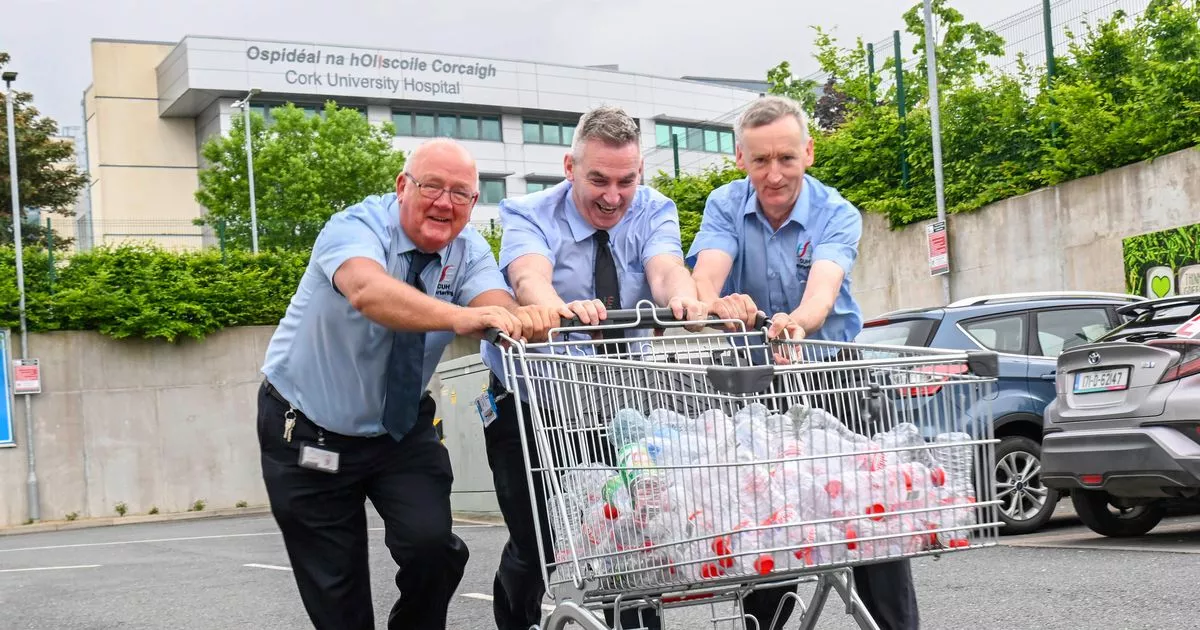
While visiting my mum in hospital recently I was surprised they use all bottled water, it is rather odd the hospital is not recycling but using the deposit they paid on the bottles for charity.

 
I thought it was because its a different type of plastic, not PET but HDPE. But I don't really know - I'd thought I'd read something but can't find it now. But this applies to milk, I'd guess that some of the juice/coffee drinks are PET.

Interesting letter from IWMA arguing for an automated solution by in 2021, and not the manual solution that was rolled out (I only read some of this and have no knowledge of either system). Many of the annoyances/concerns in this thread were raised in this :

That is a very interesting document, I wonder who will pay for the shortfall of €25m to €60m that they claim the system that was implemented will have.

I mean we all know it's either going to be every taxpayer or the consumer because of price hikes even across other products that are not part of the scheme because retailers have to make up for the cost of the scheme in their shops.

This whole system is a joke, it's costly, does not really bring any benefit and it's a time-consuming burden on the consumer. My nearest shop in walking distance has 2 machines, one is constantly broken and most people bring loads of bags, so it's queuing for a while before you get your turn and that it takes time to get all bottles/can in the machine one by one (instead for example multi bottle machines on the continent).

So, if I want to bring the bottles/cans to a shop that has more machines, I must drive to it, generating more bad news for the environment.

This is just another one of these crazy schemes like now having the bottle caps attached to the bottle so that it's ensured it gets also "recycled".

I wonder how much of what we return is actually really recycled and not "converted to energy" ! Plus, even if it's really recycled, how much energy is used to recycle it?
 
Back
Top