Performance Update for Colm Fagan's ARF

On the positive side at least the ride has been exciting.
True, it's been great fun, but I wonder if I should still be aiming to have fun at my age!
It bugs me at times though to think that, if I did as I did in 2023 and left the fund untouched for the entire year (in 2023, the 6% withdrawals were funded entirely by dividends and by reducing the cash in the fund), the fund would be much higher now than it actually is. That's another day's story!
If your retirement coincides with 16 years of the greatest bull market in history.... Yes.
I agree. I've said many times that I've been very lucky with the timing. The average (money-weighted) return from the start was 11% a year (precisely, to end October 2026). That's net of all charges, including platform fees. At the start, I would have been more than happy with an average of 7.5% a year net, i.e., 3.5% a year less than was actually achieved
I’m beginning to question the idea of holding individual share holdings..the volatility is unsustainable for the vast majority of investors.
I can see where you're coming from; however, it's exactly the opposite with me for some of my holdings, i.e., holding individual shares provides a degree of comfort that I could never replicate with a faceless unit-linked fund. Let me explain.
The graph on the right below is what I'd see if I had a unit-linked fund consisting entirely of Standard Life shares. The graph on the left is what I look at when I'm thinking of taking an income for the next 5, 10, 20 years. Which graph would you prefer to be associated with?

1794653764151.webp
 
Last edited:
however the ceo needed to step back at some point and the most recent events have accelerated this. At least the transition to a new leader and more traditional governance structure has begun.
Huang notably had more direct reports than the typical CEO, with a "direct staff" of approximately 60 employees, he said in a March 2026 interview with podcaster Lex Fridman.
:oops:
 
i.e., holding individual shares provides a degree of comfort that I could never replicate with a faceless unit-linked fund. Let me explain.
The graph on the right below is what I'd see if I had a unit-linked fund consisting entirely of Standard Life shares.
But a unit linked fund is unlikely to be comprised of shares in a single company, never mind the fund underwriting company itself. Most unit linked funds will invest in a diversified basket of shares and maybe other assets. Your seem to be making a false equivalence/comparison here?
 
I should have listened to my inner sceptic. A little digging would have alerted me to the risk. That was brought home to me on Wednesday of this week when I met two friends for a pub lunch. One of them told me that, months ago, he had read a short seller’s report warning of what might happen. I wanted to grab him warmly by the throat but limited myself to asking why he didn’t tell me of the report after reading my piece on LinkedIn. “You never asked me”, he said. He’s right. I didn’t. Next time, “friend”, let me know before I ask.

A bad outcome (nor a good outcome) does not necessarily indicate that the decision making process was flawed. What was the short report and what probability did they assign the to the CEO getting in with a Chinese honeypot?!
 
What was the short report and what probability did they assign the to the CEO getting in with a Chinese honeypot?!
Hi @Itchy. Here is the report:
I should clarify that I understood initially during our pub conversation on Wednesday - incorrectly - that my friend had seen the report months previously. He hadn't. He only saw it the day before we met. The report was produced months previously.
He wrote to me after he saw my piece (on LinkedIn) to clarify and also to point out that, even if I had seen the report months ago, I would probably still have bought the shares. He's right.
The main point of my piece was that I was naïve to think, when buying the shares, that I had discovered a secret source of value that the market in general wasn't aware of. The reality is that there were players in the market - probably only a relatively small number - who had a good idea that something nasty, which most of the players in the market were unaware of, was going to happen. The "too good to be true" price on its own should have alerted me to that fact.
 
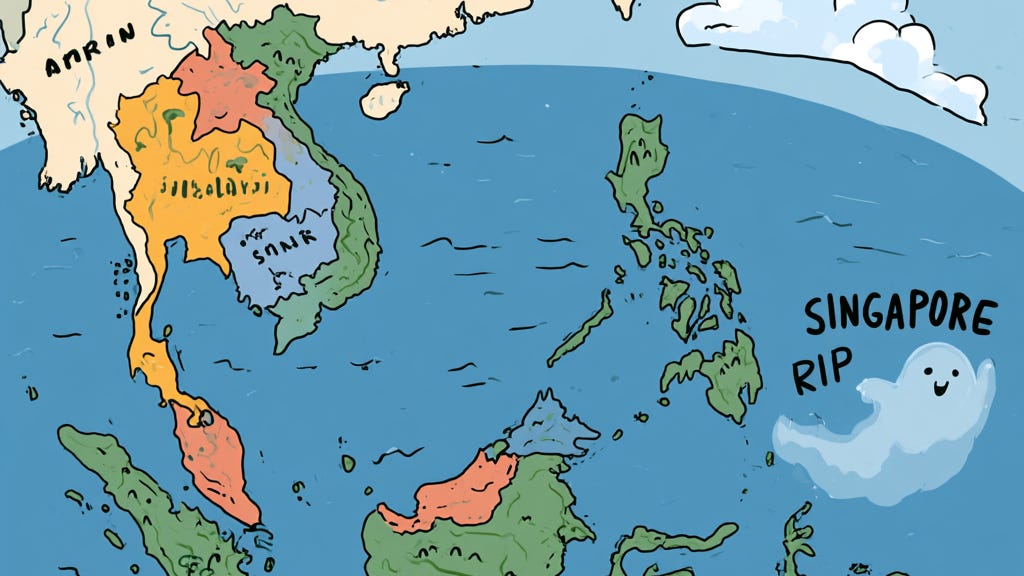
Michael Burry says that only now the media are covering this Chinese through Singapore back door route.
"The press has now started to do its job on NVIDIA. Sad that it took a lurid affair to snap everyone out of it."


He quotes the following report.

How Jensen Huang Built the Backdoor Route That Keeps Beijing in the AI Race
Massive data centers in Southeast Asia exploited a gap in U.S. sanctions, providing crucial computing power for Chinese companies and a cover for alleged chip smuggling
https://www.wsj.com/tech/jensen-huang-backdoor-ai-data-centers-a5e4499d?st=m8aPBK&utm_source=substack&utm_medium=email

Have there been other cases where the media didn't do their jobs /investigate elements of business activity etc like this one?
 
Back
Top