Howth Head
Registered User
- Messages
- 108
Like many of you I suspect, I'm suffering badly with the current temperatures - not that I don't enjoy the balmy evenings sitting outside - or a pint in the open air (And I did have a few in Finnegan's, Dalkey over the weekend at the book festival!)
At this moment (just after 10pm) I've every door, window and skylight in the house wide open in a vain effort to get a breeze running through the place. Attic doors are open too - in a dormer the hot hair gets trapped both above, and on either side of the top of the house, wrapping around it like an electric blanket. I won't sleep much tonight, if at all and will struggle for the next few days to do normal stuff.
It won't last forever of course - and I'm all for a bit of decent weather after the long winter and that extra wet Spring. Plus, we don't have it anything like as bad as they do in France, Germany, the south of England and elsewhere in Europe where the heat-related deaths are sadly mounting up.
But it's this kind of thing from RTE and others that gets my goat up. Yes - it's the inevitable tsunami of, "everywhere-in-the world-is-warming-faster-than-everywhere-else-in-the-world," articles and features that seem to be stockpiled in newsrooms ready to take the joy out of a warm spell.
And I'm no scientist - but my extensive research and "lived-experience" indicates that the front of the house - where the sun shines during the hottest part of the day - is twice as warm as the back of the house. I think I'll patent the idea of building houses on slow-spinning turntables (like they used for turning steam engines) to ensure the building is evenly cooled - or cooked - throughout the day! Stay cool...

 www.rte.ie

 www.irishtimes.com
https://news.un.org/en/story/2025/06/1164781
 www.pbs.org

 www.theguardian.com
 www.theguardian.com
At this moment (just after 10pm) I've every door, window and skylight in the house wide open in a vain effort to get a breeze running through the place. Attic doors are open too - in a dormer the hot hair gets trapped both above, and on either side of the top of the house, wrapping around it like an electric blanket. I won't sleep much tonight, if at all and will struggle for the next few days to do normal stuff.
It won't last forever of course - and I'm all for a bit of decent weather after the long winter and that extra wet Spring. Plus, we don't have it anything like as bad as they do in France, Germany, the south of England and elsewhere in Europe where the heat-related deaths are sadly mounting up.
But it's this kind of thing from RTE and others that gets my goat up. Yes - it's the inevitable tsunami of, "everywhere-in-the world-is-warming-faster-than-everywhere-else-in-the-world," articles and features that seem to be stockpiled in newsrooms ready to take the joy out of a warm spell.
And I'm no scientist - but my extensive research and "lived-experience" indicates that the front of the house - where the sun shines during the hottest part of the day - is twice as warm as the back of the house. I think I'll patent the idea of building houses on slow-spinning turntables (like they used for turning steam engines) to ensure the building is evenly cooled - or cooked - throughout the day! Stay cool...
Why is Europe the world's fastest-warming continent?
The latest heatwave sweeping across Europe is a stark reminder that it is the world's fastest-warming continent, stretching into an Arctic that is heating at an even greater pace.
Ireland’s climate is on steroids. The extremes of recent days will become the norm
Europe as a whole is now warming twice as fast as the global average
https://news.un.org/en/story/2025/06/1164781
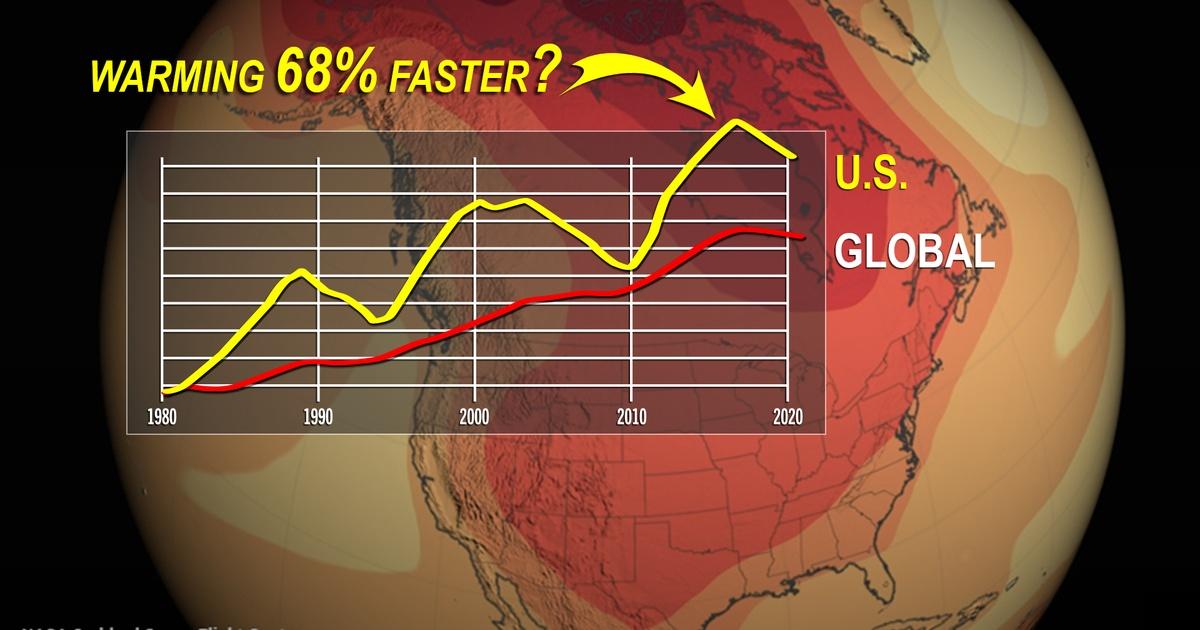
Weathered | Why Is The U.S. Warming Faster Than Average? | Season 3 | Episode 15
The US is warming 68% faster than the global average. Why?
New England warming faster than most places on Earth, study finds
Pace of area’s temperature rise, outpaced in US only by Alaskan Arctic, apparently increased in past five years
www.theguardian.com
South pole warming three times faster than rest of the world, our research shows | Kyle Clem for the Conversation
Dramatic change in Antarctica’s interior in past three decades a result of effects from tropical variability working together with increasing greenhouse gases
www.theguardian.com
Last edited:


