Are income tax rates really too high in Ireland

There is almost always a net return to the state on taxes spent. That doesn’t negate the fact that the State is spending the money you or I pay in taxes on educating our children. That is one of the many things we get for our taxes
But that has never been your argument before. Of course we all pay for all of the children to be educated and overall that is the benefit to the state.

But you continually imply that a set of parents with more kids are somehow gaming the system and are net beneficiaries because they are getting "more education" than anyone else.

It's nonsense, we each receive 1 education.
 
If you taxed lower incomes
In relation to all the points you make above - if you want a broad social welfare state, you need a broad tax base. We are out of kilter with other European states in this regard. It is papered over by the corporate tax and FDI environment. The Troika tried their best to get us to broaden the tax base (including via property and water charges, also) and we have been progressively narrowing it since the left. Thousands lifted out of income tax and "Universal" Social Charge, water charges gone, property tax never indexed in practice. An overly narrow tax base echoing mistakes we made pre 2008.
 
In relation to all the points you make above - if you want a broad social welfare state, you need a broad tax base. We are out of kilter with other European states in
a good reason to have broader taxes on lower incomes to reduce the shock of any downturn
the money is better off left with the lower paid If taken in tax it will get wasted, I know you don't understand But someone in the Department if Finance knows it is better off left to the lower paid and ignore the wingers who do not understand,
this regard. It is papered over by the corporate tax and FDI environment. The Troika tried their best to get us to broaden the tax base (including via property and water charges, also) and we have been progressively narrowing it since the left. Thousands lifted out of income tax and "Universal" Social Charge, water charges gone, property tax never indexed in practice. An overly narrow tax base echoing mistakes we made pre 2008.
Which back up my point
 
Last edited:
the money is better off left with the lower paid If taken in tax it will get wasted, I know you don't understand But someone in the Department if Finance knows it is better off left to the lower paid and ignore the wingers who do not understand,
It's a political decision. Reports from the likes of the tax strategy group commissioned by the government explicitly called out our narrow tax base. Think tanks left, right and center and non-partisan bodies like IFAC talk about it all the time. Methods for broadening the tax base may differ, but the fact it is narrow and that a narrow tax base is a mistake is generally and widely held.
 
and a good reason to have broader taxes on lower incomes to reduce the shock of any downturn.
This is the Issue I have Not With You I Might Add ,

I kind of know the kind of people who sprout the above They are very very narrow minded who look down on people and I will always call it out, Most who I know who sprout the above never paid any USC Until The TRIOKA arrived.
arrived
All of the above can be brought into paying more tax by a simple adjustment of income tax rates if need be they are already taxed under PAYE it is only a matter of changing the tax bands,
To me widen the tax net means other sources of taxation all of the above are in the Income tax net if need be,
 
Last edited:
But that has never been your argument before. Of course we all pay for all of the children to be educated and overall that is the benefit to the state.
I am responsible for my children. It is up to me to ensure that they have shelter and food and it is up to me to make sure they receive an education. The State provides the education via a publicly funded system. That is something I get for my taxes. The more children I have the more the State spends educating my family.
But you continually imply that a set of parents with more kids are somehow gaming the system and are net beneficiaries because they are getting "more education" than anyone else.
No, they are not gaming the system but they are receiving more for their taxes than a family with fewer children.
A single person earning €100,000 a year with no children and no health issues is a massive net contributor to the exchequer. A person with four children earning €100,000 a year probably isn't a net contributor to the exchequer.

It's nonsense, we each receive 1 education.
Yes, so multiply that education by the number of children you have and that's what you are getting for you taxes in relation to education.
 
Billions of income tax is paid by people working in high tech, high wage employment that is necessary for their activities in Ireland.
Yes, a point I have made many times. Without it we would have an economy like Estonia's.

All the pharma plants in the country are hardly boilerplate names on a virtual office door.
Sure, but that's not where we get the corporation taxes from. They cold do all that manufacturing here and pay much lower tax. The EMEA headquarters of Shein is in a modest office on Stephen's Green. They employ around 30 people. They aren't here for our highly educated workforce.

It does highlight how precariously narrow our tax base is (the corporate taxes from a limit number of companies, and the income tax from their very highly paid employees) and a good reason to have broader taxes on lower incomes to reduce the shock of any downturn.
Exactly.
 
Sure, but that's not where we get the corporation taxes from. They cold do all that manufacturing here and pay much lower tax. The EMEA headquarters of Shein is in a modest office on Stephen's Green. They employ around 30 people. They aren't here for our highly educated workforce.
Research done by IFAC, journalists, etc to try and identify the top corporate tax payers brings a list that looks something like the below. About 60% of corporate profit taxes and obviously a lot of further payroll taxes... quick search on their establishments shows that every one of them has major on the ground operations, with billions of capex invested into Ireland in many cases.
  • Apple - significant on the ground establishment since the 1980s, 6,000 employed
  • Microsoft - Ditto, 6,400 employed
  • Eli Lilly - 1978, 3,700 employed
  • Alphabet/Google - 2003, 5,000 employed
  • Meta/Facebook - 2008, 3,000 employed
  • Pfizer - 1969, 4,000 employed
  • Intel - 1989, 5,000 employed
  • Johnson & Johnson - 80 years(!), 5,000 employed
  • Medtronic - 1999 and 4,000 employed
  • Coca-Cola - 1959 and about 1,000 employed (but tbh, the majority of the profits do sound like IP placement rather than servicing the local market)
  • MSD - 50 years and 2,700 employed
 
Last edited:
Research done by IFAC, journalists, etc to try and identify the top corporate tax payers brings a list that looks something like the below. About 60% of corporate profit taxes and obviously a lot of further payroll taxes... quick search on their establishments shows that every one of them has major on the ground operations, with billions of capex invested into Ireland in many cases.
  • Apple - significant on the ground establishment since the 1980s, 6,000 employed
  • Microsoft - Ditto, 6,400 employed
  • Eli Lilly - 1978, 3,700 employed
  • Alphabet/Google - 2003, 5,000 employed
  • Meta/Facebook - 2008, 3,000 employed
  • Pfizer - 1969, 4,000 employed
  • Intel - 1989, 5,000 employed
  • Johnson & Johnson - 80 years(!), 5,000 employed
  • Medtronic - 1999 and 4,000 employed
  • Coca-Cola - 1959 and about 1,000 employed (but tbh, the majority of the profits do sound like IP placement rather than servicing the local market)
  • MSD - 50 years and 2,700 employed
Apple pays over a million dollars per employee in corporation tax here. Microsoft pays around $800,000 per employee... you get the picture. They are paying taxes here based on global activities. The idea that they would be located here and manufacturing/producing here if it wasn't for our corporation tax system is absolutely fanciful.

That said our tax harvesting policy goes all the way back to 1956 when we introduced the Export Profits Tax Relief scheme but it was only after we joined the EEC that it really became useful to both us and US MNC's. We then moved to a 10% rate on manufacturing companies, expanded to financial services with the creation of the IFSC in the 1980's, then to 12.5% in the 1990's after the European Commission deemed our selective rate to be State aid.
Right. But under the OECD reforms of corporate taxation, you require (now even more than ever) true substance in a market to place significant profits in that market. That has been why corporate taxes have gone from where they were to where they are now.

Going back to the argument on income taxes - I think there is a risk to future international tax reforms undermining the base, we could keep all these firms and their employees here but lose significant profits to tax (not all of it). And thus a wider tax base overall would be preferable in my view.

Treat the corp taxes as oil wealth, into funds, and make sure you can cover all current expenditure without it.
 
Going back to the argument on income taxes - I think there is a risk to future international tax reforms undermining the base, we could keep all these firms and their employees here but lose significant profits to tax (not all of it). And thus a wider tax base overall would be preferable in my view
We already have a income tax system in place if we need to increase taxes from this sector,
You cannot increase taxation on labour PAYE unless you widen the tax base in other arears,
Treat the corp taxes as oil wealth, into funds, and make sure you can cover all current expenditure without it.
As we seen in the last few weeks this will not happen you would need to cut the wages and pensions of powerful groups which cannot be cut by law,,
Do you really think you could increase income tax on low incomes to pay inflated wages and pensions to the people who have a cast- iron pay and pensions employment agreements in place backed up by the law of the land,

What you call for want of a better word our oil wealth is already pledge to abide by cast iron wage and pension agreements already entered into, and the rest is in what I call a rainy day fund which for the most part will have to be used to Honour/respect existing cast-iron agreements entered into by the state by our freely elected government over many elections,
C Pike
Do you understand the corp taxes as oil wealth most are already pledged what is left Is been put into a Fund first call on those funds for the most part will be to honour existing legal binding agreements, the people you want to tax more to build up those funds have no legal entitlement to any of it come a rainy day,
Those who do not have any legal Entitlement to any of the above Corp funds are better off to leaving things as they are and build up a private pension,/Investments so they have something to fall back on come the rainy day,
 
Last edited:
But under the OECD reforms of corporate taxation, you require (now even more than ever) true substance in a market to place significant profits in that market.
Pillar 1 of the reforms required that a percentage of overall corporate revenues be allocated to eligible jurisdictions in proportion to the amount of revenues generated in each jurisdiction. I think this is what you were referring to. But Pillar 1 was never implemented. Only Pillar 2 has become operational requiring a global minimum of 15% taxation.

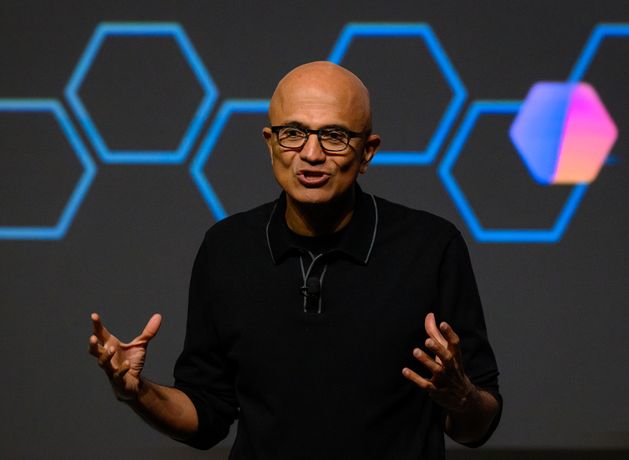
Microsoft has two big tax paying companies in Ireland.

Microsoft Ireland Operations employs about 3,000 staff in Ireland. They are big earners and pay a lot of income tax to the exchequer. However, the company paid about $850 million in Irish corporation tax on a profit of €5.2 billion.
On the other hand, Microsoft Research Ireland employs a relatively insignificant number of staff. It operates as a repository of IP assets which it licenses for use globally. Last year it paid $5.4 billion in Irish corporation tax on a profit of €41.4 billion (up from $11 billion in 2018).
 
A person with four children earning €100,000 a year probably isn't a net contributor to the exchequer.

If you apply the cost of the education to the parent then you must also apply the taxes they earn when working. The four children fund their parents pension and others.
 
If you apply the cost of the education to the parent then you must also apply the taxes they earn when working. The four children fund their parents pension and others.
I do not want to go down this rabbit hole just to point out if you take France as an example you are taxed at a higher rate if you have no offspring for the above reason while you are around,
 
If you apply the cost of the education to the parent then you must also apply the taxes they earn when working. The four children fund their parents pension and others.
Correct, if those children earn enough in the future to be net contributors. Corporation tax receipts exceed the value of all employment related taxes. Employment related taxes account for around 35% of total receipts. The top 10% of earners pay over 50% of those employment relates taxes. That means that 90% of people contribute around 17% of total government revenue through their payroll taxes and deductions. If VAT is included then that figure is probably closer to 25% but it still shows that the vast majority of people are net recipients from the State. There's nothing wrong with that but people should realise that they are already better off than they would otherwise be if the State wasn't taxing them and providing services.
 
Corporation tax receipts exceed the value of all employment related taxes. Employment related taxes account for around 35% of total receipts.

Yes but these cooperation tax are at least in part due to the work of the employees who support directly and indirectly. Tesco doesn't make a profit without truck drivers, shelf stackers etc.

Yes some of the corporate tax is less direct to general labour input, perhaps a magic money tree owned by us all?

I don't think you can

Whether someone is a €1 contributor or receives €1 is slightly irrelevant, its just a €2 difference and regardless of how you count it people will end up in different places at different times in their lives.

But there is a difference between some one chooses never to work and live off benefits for life and someone working paying taxes on an average income but not a net contributor.
 
Yes but these cooperation tax are at least in part due to the work of the employees who support directly and indirectly. Tesco doesn't make a profit without truck drivers, shelf stackers etc.

Yes some of the corporate tax is less direct to general labour input, perhaps a magic money tree owned by us all?

Yes, but what's that got to do with the taxes people pay?


Whether someone is a €1 contributor or receives €1 is slightly irrelevant, its just a €2 difference and regardless of how you count it people will end up in different places at different times in their lives.
I agree, though most people receive vastly more than they pay in. That's a good thing; the State should be run for the benefit of the people and in our case, for the most part, it is.


But there is a difference between some one chooses never to work and live off benefits for life and someone working paying taxes on an average income but not a net contributor.
I agree but again, what's that got to do with the taxes you pay?

The fact is that low and middle income people in this country are, from a payroll taxes perspective, very under taxed in this country compared to our Northern European counterparts.

The narrative that there is a squeezes middle who pay all the taxes and get nothing in return is absolutely false. In fact if anything the opposite is true.

Those are the facts and in a discussion about income tax those facts matter.
 
Back
Top