New Ireland charging AMC of 2.75% on AVCs!

So if you contribute less than €125 per month, you will pay

An initial charge on every premium of 8% ( An allocation rate charge of 3% and a bid/offer spread of 5%)

And an Annual Management Charge of 2.75% for the first 10 years followed by 0.75% after that.

This is absolutely scandalous. Surely one of the staff members teaching financial maths or accountancy or economics in a third level should have shouted stop as soon as this scheme started?
 
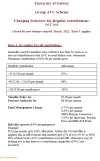
There are three charging structures on this New Ireland Group AVC, of which the first two are closed to new business.


First charging structure, basis A (closed for new business)

Extremely high entry fees, but reasonable AMC of 0.65% to 0.95%

Example on €200 pm is 99% allocation less 5% bid/offer spread = 94% net allocation, or a 6% entry charge.

Plus €3.49 pm fee.

1778541838896.webp


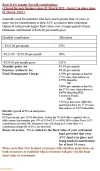
Basis B, also closed, is the subject of this thread.

The same allocation rates apply, and the same bid-offer spread.

But the difference is higher AMC for the first ten years, with a 5% bonus at the end.

AMC is 2.65% or 2.75% for first ten years.
1778542020211.webp


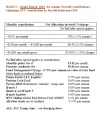
Basis C applies to staff joining since 2022.

The bid-offer spread is gone.
The AMC are 0.65% to 1.1%

The allocation rates are 95% or 96.4% or 97.45% if you save a lot.

1778542181161.webp
 

Attachments

Last edited by a moderator:
Yes, there are three charging schemes.

But we are trying to explain the charges that the starter of the thread, Amstel, is being charged.
 
There are three charging structures on this New Ireland Group AVC, of which the first two are closed to new business.
Yes and Basis A was originally the "default" basis.
If OP had been in this the charges would have been 4% contribution, a policy fee and 0.75% AMC. Not world beating but reasonably conventional.
But as an alternative there was this dinosaur of a Basis B with "initial units". For 10 years these would be subject to an additional 2% AMC and if you keep your bib clean and stay with the plan you will get a 5% retirement bonus. In fact if the term to retirement is long enough the retirement fund on Basis B could even be higher than on Basis A.
New Ireland helpfully suggest that they do projections on both bases.
Well OP was planning on early retirement and Basis A would trounce Basis B on that timeline.
It's a pity that New Ireland didn't get round to showing OP the results of their two projections.
 
The AVC is New Ireland, with no broker
The broker is someone in the New Ireland direct sales team, who is a tied agent and lives off their commission.

What is scandalous is the someone in HR approved this scheme to be offered to its staff. They are being absolutely fleeced, many of them just signing the forms without a thought about charges, assuming that as HR approved it, it is fine.

Always be wary of plans that offer bonus payments, you will be paying for the bonus through higher charges.
 
It's a pity that New Ireland didn't get round to showing OP the results of their two projections.
Seen like this, it's pretty scandalous.

Revealing my ignorance here, but perhaps there are people reading this who can benefit from the discussion, I am trying to understand the "initial units" bit.

Consulting Gemini, I think this means that units purchased in the first year, or maybe 2, are subject to higher management charges (on an ongoing basis?), effectively meaning that the value of these units grows more slowly than units subsequently purchased? But those higher management charges are only applied to those initial units, although none of this is clearly broken down or illustrated in the statements? Can it be that the 2.75% is applied only to part of the fund and a lower rate to the rest?

And this might be a reason why, in my statements, actual figures for "fund-related charges" are only listed separately for the first time in year 3? As opposed to "fund growth net of fund-related charge" in years 1 and 2?

Surely even the lack of transparency is outrageous?
 
I am trying to understand the "initial units" bit.

They don't affect you, so you don't need to understand them.

But old investment policies ran this system whereby your early investment went into initial units which had very high charges attached to them. Later units had lower charges.

The outcome is the similar to yours but not quite the same.
 
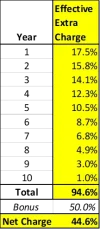
Below is a summary of the effective extra 2% charges on the first 10 years' contributions. (with some immaterial approximations, such as ignoring growth).
The net position is equivalent to 44.6% of one year's contributions.
1778585411793.webp
 
I am trying to understand the "initial units" bit.
They're a throw back to the old days, when brokers got paid up to 50% commission for setting up a plan...all of which had to be recouped by the life company and initial units was one way. They would have very high amc for a number of years and then drop to a quite reasonable rate thereafter.

Another snag with initial unit contracts was that recouping the commission paid was through the lifetime of the policy, so if you tried to move/ mature you pension before the retirement age, you'd get hit with penalties. The commission paid was based on years to retirement, so many brokers would put a retirement age of 70 to get the maximum commission. The poor client couldn't access their pension without penalty until then. :oops:
 
I've said it before, and I'll say it again ... the options for low/reasonable charges on pensions are much more widespread these days compared to the days when I was first looking at pensions. When things like a whole year or even two of contributions going on charges before you actually started accumulating any pension pot, on which hefty charges were still levied - e.g. < 100% allocation and AMCs well above 1% - were still common.

It's just a pity that this thread is a reminder that outrageous charging structures still exist, the unwary may be hit with them, and some workplaces and unions seem to tolerate them.
 
Below is a summary of the effective extra 2% charges on the first 10 years' contributions.
I'd like to understand this better. You mean 2.75% instead of 0.75% charges, I take it.
Suppose, because it's an easy figure to work with, someone paid in 1K per year.
Where do the figures in the yellow column come from?
Thanks in advance!
 
@Amsel26 I am calculating the extra charges that Basis B involves over Basis A. That is 2% p.a. of the fund followed by a 5% bonus after year 10.
Not sure of your familiarity with math but here goes. 2% extra charge reduce your fund to 98% of its value. Your year 1 contributions are on average in the fund for 9 and a half years (assuming monthly payments) so they suffer this reduction 9.5 times. 98% x 98% x...9.5 times reduces the fund due to your first year's contribution by 17.5% of what they would have been under Basis A. So assuming €1k paid in the first year and ignoring for convenience the growth in the fund that would mean a total reduction of €175.
Somewhat less for contributions in year 2 and so on. In total a reduction of €946 or given the approximations a full year's contribution for ease of memory.
Now presuming you are entitled to that 50% bonus and again on our simplified assumptions the fund after growth and charges happens to equal the 10k total contributions then the bonus would be €500. So roughly speaking, all in, you are worse of by about a half a year's contributions than would have been the case with Basis A.

If you are handy with spreadsheets I can attach one here for you.
 
Ok, I understand better now, thanks. Of course I should have suggested €10K as the example figure for yearly contributions, which brings things more into focus and makes it all look pretty grim. So close on €10 in fees over a ten-year term, mitigated somewhat by a 5% bonus, still leaving overall management charges of something like €4,500.

And this, presumably, is in addition to the "loss" of 4% of each premium that is not invested?

Maths was not my best subject, but I'm very partial to a nice spreadsheet ;) so yes, please do attach, thanks.
 
Back
Top