Is there broad support for the current Public Sector strikes?

Take any block of 360,000 private sector employees with equivalent skills and qualifications and experience and I'd suggest you will see pay rates far in excess of what public sector employees receive with as much, or more waste and inefficiency embedded into those sectors also.
Lower paid Public Servants are paid significantly more than their Private Sector equivalents. Higher paid Public Servants are paid significantly less than their Private Sector equivalents. Overall Public Servants are paid more than their Private Sector equivalents.
The problem is what type of businesses are compared. Multinationals have a vast amount of capital invested per employee and so can and do pay more. If we are making a comparison between the State Sector and large Private Sector organisations it would be more useful to look at banks and insurance companies or larger indigenous companies.

Comparing individual private sector businesses that are competing against one another on a commercial basis for goods and services for market share with public sector services that society as a whole deems critical to the functioning of the entire state makes no sense. No sense whatsoever.
It makes sense in that they are competing for the same pool of talent.

On a general note I'm not in favour of the current strikes for the same reason that I want wealth taxes and investment in education (not transfers of wealth from the education budget to teachers) and less transfers of wealth to old people. It's the same reason I hate gated communities and private security like they have in America. I want everyone to have a stake in the success of the whole country. That means everyone having a concern about the success of everyone else. Teachers who on average get paid more than twice the average industrial wage and Gardai, who on average get paid more than teachers and Hospital Doctors who on average get paid around four times the average industrial wage do not need pay increases. We need to make the country function better so that people don't feel squeezed.
 
If we are making a comparison between the State Sector and large Private Sector organisations it would be more useful to look at banks and insurance companies or larger indigenous companies.

Yes, that seems reasonable. And if you compare banks and insurance companies with say a government department then

Lower paid Public Servants are paid significantly more than their Private Sector equivalents.

is not my understanding or perception.

I want wealth taxes and investment in education (not transfers of wealth from the education budget to teachers)

Paying teachers decent wages is an investment in education. Particularly
It makes sense in that they are competing for the same pool of talent.

as private sector workers.

I want everyone to have a stake in the success of the whole country. That means everyone having a concern about the success of everyone else.

This is all very laudable but there is an inherent bias, or at least inconsistency, in how you approach these discussions. On the one hand when it comes to people working in a private company,
You don’t think that people in a private company are motivated by anything other than a profit margin?
You must have a very low opinion of humanity.

on the other hand when it comes to public sector workers like teachers,
They want more money and services be damned.

Most of us here have probably been through the Irish education system. While I can point to handful of teachers that appeared somewhat out of their depth, in the main the teachers were good at their jobs and in some instances truly excelled.

One thing I would find hard to point is a teacher that was just in it for the money. That is a sentiment that is shared with most people I know.

I've worked in the private sector - in fast-food, factory assembly line, warehousing, retail. I can assure you money was the primary motive.
 
This statement is false.

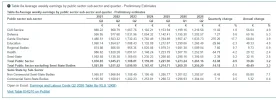
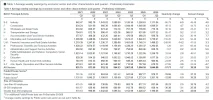
Mean earnings in industry = €1,172 per week

Mean earnings in Education = €1,077 per week
I said average, not mean.

From the Irish Times:

According to data from the Department of Education, there are 43,451 primary teachers at the end of June, with a total wage bill of €3.96 billion, giving an average of more than €91,000 annually.
For secondary teachers, the total number is 35,707 and the total pay bill is €3.08 billion, so the average figure is €86,000 – again subject to the caveats entered above for primary teachers. The OECD figure for average secondary teacher pay is €69,747.

What about doctors and nurses? The total figure for nurses and midwives employed is just under 50,000, with a total pay bill of €4.4 billion; an average of €88,000 a year. For doctors, the total bill for 15,631 medical and dental staff is €3.1 billion, giving an average of €198,000.

I've no interest in earnings data expressed in terms of salary scales. They tell us very little. The total spend on wages divided by the number of people employed in the average income.

Those figures don't take pension values into account or the fact that on average full time State employees work fewer hours per week and fewer weeks per year than their private sector counterparts.
 
From the Irish Times:


I've no interest in earnings data expressed in terms of salary scales. They tell us very little. The total spend on wages divided by the number of people employed in the average income.

Those figures don't take pension values into account or the fact that on average full time State employees work fewer hours per week and fewer weeks per year than their private sector counterparts.


Be careful here.

PS pay bills typically include both wages and pensions in payment.

Dividing the total pay bill by just the number of active employees will give an inflated figure for average wages.

Also, the paybill includes employer's PRSI.
 
PS pay bills typically include both wages and pensions in payment.

Dividing the total pay bill by just the number of active employees will give an inflated figure for average wages.
Are you sure about that? The data from specific departments does not mention pension payments. The data quoted in the article specifically excludes pension costs.
 
Back
Top