Data center electricity use

Once we have the interconnector with France up and running we'll have access to their clean and green nuclear power.
Is this the one that's been delayed yet again, for at least two years this time, or is this news merely "dogma and hyperbole"?

From May this year

Based on the numbers, if "someone" could get the distribution grid/network working to harness the wind-generated electricity we already have, and get it to point of use, we wouldn't need to waste more money on an interconnector of any kind. We'd leave the sea-bed and the fishes and other wild-life alone and be more independent of 3rd parties. But that would't suit those with a deeply flawed nuclear agenda.
 
working to harness the wind-generated electricity we already have, and get it to point of use, we wouldn't need to waste more money on an interconnector of any kind.
That's simply not true, there isn't a direct correlation between the availability of wind generation and demand.
 
Is this the one that's been delayed yet again, for at least two years this time, or is this news merely "dogma and hyperbole"?

From May this year

Yep, that's the one. If it's finished in 2028 I'll be surprised and delighted.

Based on the numbers, if "someone" could get the distribution grid/network working to harness the wind-generated electricity we already have, and get it to point of use, we wouldn't need to waste more money on an interconnector of any kind.
Upgrading the grid will be very expensive and disruptive to both the economy and ecology of the country. It's absolutely necessary though so it'll have to happen.

We'd leave the sea-bed and the fishes and other wild-life alone and be more independent of 3rd parties. But that would't suit those with a deeply flawed nuclear agenda.
The problem with wind energy and is that it is generated far away from where it is consumed and is generated by small quantities of windmills in dispersed locations. The infrastructure (wires) to bring that onto the grid require pylons and lots of concrete. If we had large wind farms near population centres they would be more viable.

Even if we got the grid up to scratch we'd still have to almost double our generation capacity in order to charge all of the electric vehicles we want to have. The energy generated from burning hydrocarbons is around 4 times greater than the total we generate from our electricity generation network. The idea that we can replace that with wind and solar is utterly fanciful.

We can either continue to use Nuclear power from Wales and start using Nuclear from France or do that anyway and generate our own nuclear power. It's that or continue to destroy the environment and kill thousands of out fellow citizens each year by burning fossil fuels.
 
  • Like
Reactions: Leo
We can either continue to use Nuclear power from Wales and start using Nuclear from France or do that anyway and generate our own nuclear power. It's that or continue to destroy the environment and kill thousands of out fellow citizens each year by burning fossil fuels.
Dont be upsetting Greta, she had a great time in Belfast and doesnt need this sensible talk.
 
The Chernobyl accident happened in 1986. That's 40 years ago. Between 4000 and 9000 people died as a result of that. During that time more than 64,000 people have died from air pollution in this country alone (1600 a year). If half of that pollution was caused by burning fossil fuels that's 32,000 people or more people than have been killed by nuclear power ever in the entire world.

Globally between 2,500,000 and 5,000,000 people die each year due to pollution caused by the burning of fossil fuels. That's more than everybody who has ever died from any form of human generated nuclear energy, including the bombings of Hiroshima and Nagasaki.


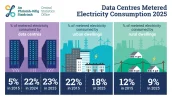
1786464682137.webp


The data provided to the CSO covered all meters connected to the mains electricity network. Data centres were not readily identifiable in the meter data so the CSO examined around 2.6 million meters to identify Meter Point Reference Numbers (MPRNs) that were considered as primarily being used for data centre activity. The CSO looks for both new Meter Point Reference Numbers for existing data centres as well as for new data centres. A small number of data centres accounted for most of the metered electricity consumption by data centres.

The CSO used several approaches to identify data centres.

  • An examination of the type of business activity that Large Energy Users were engaged in. These meters are monitored in 15-minute periods and the largest data centres are generally classified by ESB Networks as Large Energy Users.
  • A search for names and aliases of known data centres with a consumption above a half gigawatt hour.
  • Examination of customers located in specific business parks with a consumption above a half gigawatt hour.
  • Examination of all meters with an annual consumption above one gigawatt hour.
  • In addition, reports produced by other organisations, the CSO Business Register, and internet searches were used to supplement our work.
 
any person with business

Yes, but what about domestic users. Your claim was that the 19c per unit was attainable for any domestic user with the same usage pattern. But domestic usage cannot be written off as a business expense, so its not really comparable.
 
1786464682137.webp
Yes- that is correct and I don't dispute those figures in any way.

However datacenters do not use 23% of generated electricity at peak times. If the CSO did a 9am to 7pm consumption chart, data centers would be 14%-15%, households (combined urban & rural) likely 35%.

Capacity constraints are only during daytime hours and even then, its Monday to Friday.

Generation capacity is about 8000 mwh, additional short term generation is also available if required. At present the average daytime use is 5,000-5500 mwh. Night time and weekends is 3500-4000. So zero pressure on the grid in the summer months.

On a very cold winters day, daily peaks can go over 6500.

Data center use in 2025 was 7663 GWH - about 870 mwh/hour, So at average summer daytime generation of 6000 mw/h, data centers are using just under 15% of generated electricity. In winter when generation increases to about 7000mw/h, data centers are using about 12.5% of the load.


They are big users of electricity, but they are not as big a burden on the grid as sinn fein and their like make them out to be as they use as much at night when there is a huge amount of spare capacity available and many gas generators are shut off. (their night use is 33%-35% of generated electricity - hence you get the 23% average)

Or put it a different way - if eirgrid were an extremely wasteful operation and generated a steady 6500 mw/h 24 hours a day (20% below their standard generation capacity), data centers would use 13.38% of capacity.

Substantial - but not anywhere near the scaremongering figures opposition politicians state
 
Yes, but what about domestic users. Your claim was that the 19c per unit was attainable for any domestic user with the same usage pattern. But domestic usage cannot be written off as a business expense, so its not really comparable.
I really don't understand the query. It still gets paid by the data centers.

Is it that if they make profits, then the cost of the business expense can be applied against their income and therefore they theoretically save 12.5% or 15% (very large companies) corporation tax?

Just like every other business big and small?

That's a revenue/tax issue and nothing to do with the unit rate itself.
 
  • Like
Reactions: Leo
Hundreds of offshore wind turbines, built at speed and scale.

Unlike the current process.
Built at scale and close to Dublin (where most of the energy is used) that would cost in the region of €10 to €15 billion for a 3,000 M/W wind farm. Offshore wind is far better than onshore wind as the turbines are bigger ans the wind is stronger and more consistent.

The Codling Wind Park off the Wicklow coast is a 1,300 MW project and is estimated to cost €2 billion (but in reality will cost twice that).
 
Back
Top