Tánaiste wants to see a better return for money on deposit. A new equity SSIA?

Status
Not open for further replies.
That's good enuff for me.

For sure - our one would need to be more expansive....the British are addressing likely a market failure at the SME level only knowing that their deeper capital markets i.e. private credit (City of London innit!) has largely replaced bank credit post-Basel for large scale projects....but we have very limited private credit.....big projects and small projects get passed over here for funding or are offered usury rates.

Anyway as I've said above....the billions directed by the State 1:1 to housing delivery could indeed be sent to a sovereign wealth fund and invested with much higher ROI and better liquidity than lowly house building.....and a smart * directed SRT program delivered through AIB, BOI, PTSB would unlock deposits at those bank

* (i.e. first tranche losses are always absorbed by the developer, then the Bank say 0-10%, then State at the mezzanine level 10% to 30%, then the Bank again 30-100%)....what your aiming for here is to make it attractive enough from RoE perspective that the banks would both retain incremental tangingle capital to lend against it AND then use their deposit book to fund it.
 
That’s ok so…I’m not been penalised for investing in these companies.

They have been very profitable for me on dividend and capital gains perspective and are limiting my exposure to the US market
 
Duke…nothing like Colm. I’m a complete novice in comparison to his knowledge of investment.
Well the almost nihilist assumption is that no a matter how clued in you are, you can't outsmart the market e.g. your performance against a bog standard index will have no value bias one way or the other but should have a bigger spread of possible outcomes. Of course one can never observe the actual spread of outcomes with only one sample. I think @Colm Fagan has experienced a return close to a benchmark return, which is like tossing a con and it finishing standing up, neither Heads nor Tails. Two samples is (are?) better than one. :)
 
There is a cogent argument to be made that larger economies like the UK or US could absorb their banks withdrawing from certain credit lines because private credit sources would come in to fill the hole left behind (which is a function of their more developed capital markets).....however places like Ireland are especially hurt by it......we just don't have enough depth in our domestic capital market
Is that not a damning inditement of the irish goverment and financial sector, after all these years of the IFSC and ireland being the home for US financial products and services we still don't have a proper domestic credit market. Surely one big reason is that the irish government has been taxing the bejaysus out of any domestic investments with only a brief respite with Charlie McCreevy as finance minister. When McCreevy cut all those investment taxes and CGT he actually got more money into the government. Also when the government got money back in from the sale of bank shares and NAMA assets they didn't immediately pay down the loans with that money but swallowed up the proceeds in current spending. There was a big discussion on it in the NAMA thread last year, the loans for the bank bailout are still being paid off even though they have got 50% of the money back, they didn't pay down at least 50% of those loans !!
 
I haven’t looked at it in a while so could be wrong but usually risk is just based on realised volatility over the last 5 years.
I hadn't looked at it in a while myself. In fact I was no longer involved when ESMA fundamentally changed the math in the 2023 Update. It's still the same approach of using the statistical observed parameters of the last 5 years to work out the worst 2.5% future outcome after the Recommended Holding Period and then backfitting that to the standard deviation of a Normal distribution. But the crucial change is that the drift element is neutralised. The drift was making the whole concept meaningless. After a period of positive drift SRI's would all fall dramatically and vice versa for negative drifts - in this way it was very pro-cyclical - if markets perform well they are projected to look less risky and vice versa!
If it wasn't for the skewness and kurtosis (S & K) adjustments the SRI's would, as you say, be simply based on the last 5 years' volatility, no matter the RHP. S & K complicates the matter and apparently can be significant, pushing even a standard equity index up 1 or 2 SRI risk categories. S & K effects taper with length of RHP so in that sense SRIs are RHP sensitive..
 
Is that not a damning inditement of the irish goverment and financial sector, after all these years of the IFSC and ireland being the home for US financial products and services we still don't have a proper domestic credit market.

You bet the great crime of Irish economic development over the last 30yrs is how we've managed to attract so many of the leading edge companies of the world in finance, tech & life sciences to use our juridscation as a european/global operating platform and just how little of that knowhow, insights and best practise has been transferred to the Irish public sector AND most damningly our own indigenous private sector.

I would categorize it as frankly embarrassing.

Enterprise Ireland is currently running at a total operating cost (opex + grants/equity investments) of about HALF A BILLION euros a year. It's nearly 30yrs in existence and one cannot describe it has having been a glittering success!

Its not EI's fault nor the people that work there. The conceit at the heart of Enterprise Ireland is that a bunch of civil servants inside an Irish government agency (with all the governance and compliance that entails) can make pretend at being fast moving venture capitalists! Make me Emperor of Ireland for a day and the first place I'd drop the hammer is on Enterprise Ireland......that half a billion euros immediately redirected to actual venture capital firms who would be directed to setup their next European fund platform here with a dedicated Ireland sub-SPV that funds Irish indigenous startups AND global ones if the founder, team & HoldCo relocates here to scale.
 
@letitroll There still seems to this idiot boy something of a 3-card trick to the State providing STRs.
Here's the idiot boy view.
The State paid out (let's say) €30bn on the last bank bailouts as they were under capitalised.
They would now be capitalised to the tune of €30bn extra under new Basel rules if they wanted to pursue an equally risky strategy.
But by the Government providing €30bn upfront collateral STRs the banks are free to pursue such an aggressive strategy.
The difference seems to be that the Government has set aside €30bn to meet the next GFC and is getting a premium for doing so.
 
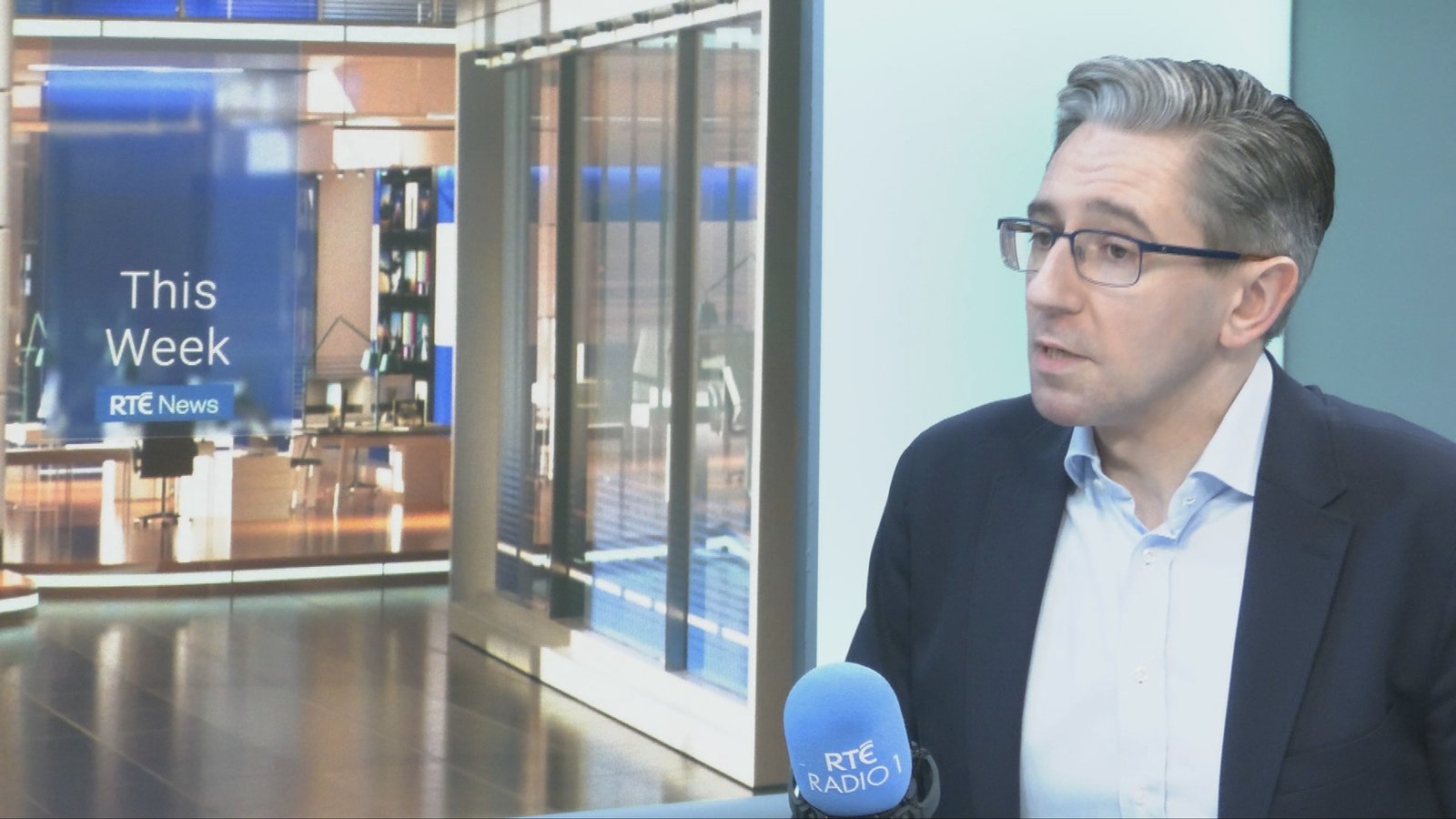
On RTE Radio One's This Week programme Simon Harris said the roadmap would be published "over the next number of weeks.
The roadmap appeared to be a more general one rather than specifically about deemed disposal or exit tax but you would assume they would be covered.

It’s an absolute priority for me during my time as finance minister, and the two budgets that I will deliver in this role, to see how we can incentivise savings and investment.It’s a complex area, I’ve got to be honest, it involves tax, it involves how much somebody can put into an account, potentially tax-free.
So what I intend to do over the next period of time, over the next number of weeks, is publish a roadmap, a framework”

He actually mentioned tax free credit union accounts and retail investment accounts. Didn’t really mention current regime, seemed to be focusing in on new type savings and investment accounts.

Short clip of this part here:


Fine Gael are republishing it as a big deal, as if they haven’t been in charge of it forever, so potentially they finally plan to do something
 
Last edited:
  • Like
Reactions: jpd
The roadmap appeared to be a more general one rather than specifically about deemed disposal or exit tax but you would assume they would be covered.
Deemed disposal is mentioned in the interview as one of the issues to consider.
 
Last edited:
You bet the great crime of Irish economic development over the last 30yrs is how we've managed to attract so many of the leading edge companies of the world in finance, tech & life sciences to use our juridscation as a european/global operating platform and just how little of that knowhow, insights and best practise has been transferred to the Irish public sector AND most damningly our own indigenous private sector.

I would categorize it as frankly embarrassing.
That is a really good point and really well made. It is utterly embarrassing. Dealing with the likes of Revenue, HSE, local authorities, regulatory bodies etc etc etc is like going back in time and it’s worse that most of them are getting, especially since the covid years.
 
Its a very welcome change in tone and emphasis compared to the pascal donohue period who kept spouting the same old rubbish when asked every time.
 
@Duke of Marmalade not really....Basel has enhanced the equity base of banks, that doesnt change under SRTs....all the extra capital buffers plus bail-in mechanics post-GFC remain in place. Everybody is fighting the last war - the banks will not be a problem even if we got GFC 2.0.

You should also think of SRTs as not being carte blanche guarantees...you should think of them like a stoploss catastrophe insurance but with limits.....remember the borrower, then the lender remain in a first loss position.....the Irish Government would take a mezzanine tranche position (lets call the 25%-40% loss layer) which if it we're called the bank would then be on the hook for the remaining losses all the way from 40% to zero...you are looking at very nominal amounts here but the way the regulatory risk models work its very meaningful change in the regulatory capital required to be held by the banks..so as you know very few things actually go to zero especially asset backed stuff selling into residential demand like we have......

You would not be setting aside €30bn or anything close to it.....in fact you wouldnt set aside anything....its a contingent liability and even in severe stress testing the State's exposure would be very limited from a euro point of view and just anywhere near €30bn or anything that would cause a sleepless night on Kildare....as I've said what should be giving taxpayers sleepless nights is just how much of Ireland's annual delivery is contingent on-going equity funding from the Dept of Housing......properly constructed SRT's would get the State out of such crazy ongoing direct capital commitments swap them for contingent liabilities that even in worse case scenarios would IMO amount to no more than what the State is paying annually now.
 
GFC 1.0 caused lets say €30bn losses in excess of shareholders stake in the banks. As it happened the State picked up the tab, the alternative was bondholders and/or depositors with the banks. If GFC 2.0 causes €30bn losses, somebody must fill that role. If shareholders losses are the same then it seems you are suggesting SRTs would pick up the tab. And if the owners of SRTs are the State...
My idiot boy question is that if we have GFT 2.0 who will pick up the tab compared to what happened in GFC 1.0? The candidates are: bank shareholders, bank bond holders, depositors, SRTs, the State - what would be the difference if the SRTs are State owned?
 
"it involves tax, it involves how much somebody can put into an account, potentially tax-free."

That sounds like an ISA so hopefully we get something similar to those.
 
If the methodology was applied to a term of say 30 years then equities would get the lowest risk ratings, but I think ESMA ratings are confined to products of much shorter duration.
This was the old method. In 2023 ESMA fundamentally revised how its SRI risk rating was calculated. It removed the effect of growth altogether - what they call the "drift" term. The SRI now measures only the volatility of the product with no offset for and extra "drift" i.e. teh Equity yRisk Premium.
Having got the original quite badly wrong their reaction should have been to abandon the concept altogether.
 
With the height of respect to the eminently knowledgable posters on this thread, but keeping track of the range of high brow terminology used in it; ala "ETF, ESMA ratings,volatility, past mean growth, past skewness, past excess kurtosis,Value at Risk, RHP's., sub-optimal risk aversion bucket, SRI, SRT's,CMU and SIU, Withholding tax, Basel rules, Deemed disposal."

and the classic “pushing even astandard equity index up 1 or 2 SRI risk categories. S & K effects taper with length of RHP so in that sense SRIs are RHP sensitive.“ (Thanks DoM!)

It occurs to me that it is hardly any wonder that the vast majority of Irish savers/ small investors opt to keep their hard earned cash in sub inflation, low interest deposit a/c's rather than confront their gross bewilderment (and glassy eyes) when confronted by the terminology above.

True, any investor wishing to seek investment opportuntities further afield than the pathetic rates offered by the domestic retail banks needs to educate themselves, but surely the solution for most lies somewhere in between the simple deposit solution and the above.

Offered the option of a relatively low risk return on investment with some tax relief and the opportunity to contribute meaningfully to growth of SME's or the construction of housing, a huge amount of small investors will jump at the opportunity.

Of course, I would echo the opinions of others that the state apparatus and incentivisation offered to small investors is currently designed more to discourage than support, with a definite bias towards large, multinational and institutional investors.

One has only to look at the ominshambles that constitutes the current state saving website (apart entirely from the pathetic rates of returns offered) whereby one can't open an online account for joint savings or U18's and refunds and encashments are made as difficult and challenging. so as to actively discourage all but the most persistent to go to the trouble and so much of their system is still paper form based and driven (I get multiple monthly postal deliveries for all my three children requiring their signatures, PPS numbers PLUS my details and co-signature in order to encash or reinvest their state savings)

To paraphrase Field of Dreams; simplify it and they will come... in their droves
 
Last edited:
Status
Not open for further replies.
Back
Top