Spain setting an interesting lead on housing needs

I expect the usual suspects to be holding this up as a plan for here sooner rather than later.
Wouldn't surprise me at all.

I can't see our government banning Funds. The central plank of the Marcy 2026 is to attract them in to build thousands of apartments.

The rest, rolling 'temporary' eviction bans which keep getting extended would not surprise me especially when you read stories like this - family of four being evicted, can't find any place else, sound like good people and good tenants. They are long term PRS so no landlord will now risk them with the 6 year and permanent tenancies.

There was an interview on Kerry Radio this morning with a Sherry Fitzgerald auctioneer, usual thing, landlords selling up and no new landlords entering the market, great for buyers but rental stock is way down and there is huge competition among people looking for a place to rent.

So yes, I think the pressure on the government to 'do something' will grow and yet another eviction ban is a distinct possibility.
 
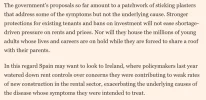
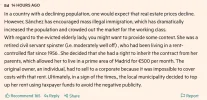
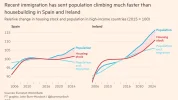
Spain isn't leading on this. It's arriving where Ireland already is, and we've got the results.

Automatic renewal? We've had unlimited-duration tenancies since 2022, and since March, large landlords can't end a tenancy for sale or own use at all. Spain's extension runs to 2028. Ours is permanent.

Eviction ban? We tried one in winter 2022. Landlords accelerated their exits and supply got worse, so it was dropped. Spain's runs to 2030.

Banning funds from buying flats? We put 10% stamp duty on bulk purchases in 2021. The only forward purchase of new apartments in Ireland this year was IRES's 77 units in Naas (funded by selling other properties) — and IRES itself is being taken private because the public market won't pay book value for Irish rental stock. There's nothing left to ban.

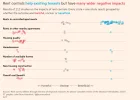
And what did our version deliver? On the RTB's own Q2 figures: private tenancies down on the quarter, seventeen of twenty-six counties in decline, new registrations at a record low, landlord numbers still falling, and the only growth in State-funded cost rental and AHB tenancies. Sitting tenants paying materially less than new ones. That's the real-terms cut, and it's why nobody's building.

This isn't a plan for here. It's the plan we've been running for four years, and Spain has just joined it.
 
So yes, I think the pressure on the government to 'do something' will grow and yet another eviction ban is a distinct possibility.
So the Spanish are seeking to stop Vulture Funds from buying existing housing stock and instead use their money to build new housing stock. If that's a desirable outcome then the State should stop using public money to buy existing housing stock and instead use it to build new housing stock.

Making it harder for people to own their own home , and that's what the State is doing by buying up existing housing stock, is not in any way a good thing. In this context the State is the biggest Vulture Fund so if Vulture Funds are banned from buying existing stock then the State should be banned from doing it too. It is outrageous that the State is taking money from people through their taxes and then using that money to price them out of the market.
 
To be fair is the word Vulture Fund correct in this context , I would associate that word with the Funds that bought up distressed mortgages etc.
While there was stuff passed a while back to stop funds buying up whole estates this has been circumvented by selling them to the approved housing bodies which again locks out first time buyers .
Surely a planning regulation for the typical 3 bed semi development for " owner occupier " only would give people looking to buy a home a chance , because even though funds cannot buy up wholesale , single unit investors can .
There is a place for investors and funds in the housing market but somebody needs to level the playing field for potential homeowners .
 
While there was stuff passed a while back to stop funds buying up whole estates this has been circumvented by selling them to the approved housing bodies which again locks out first time buyers .
That is a major problem, and a supply side problem. Too much of what is built is arguably going to the AHB/Council sector, locking owner occupiers out, and using their own tax money to do so
 
This isn't a plan for here. It's the plan we've been running for four years, and Spain has just joined it.
The government seems to have painted itself into a corner here. The March changes have made things worse not better - fewer and more expensive tenancies.

But what can the government do now, improve tenants rights? To what, 12 year tenancies, 1% annual increases, 2 property landlords are now large landlords? Anything like that will only make the situation worse. They must be seeing that now.

But they can't row back on the changes either. If they decreased the fixed period to 3 years (which I think many landlords would accept), or said large landlords were now 10 plus property people or that the annual increase had to match inflation, the opposition would absolutely murder them.

So they are stuck with an expensive and declining PRS.

I expect some silly solutions soon- like a general eviction ban and more crimes for landlords to commit.
 
new registrations are fetching higher and higher rents

Shouldn't this be expected though? At least for a period. I think LL's can set new tenancies (new registrations in effect) to 'market' rates. So a tenancy that was paying €1,000pm that ends, in an area where rents are fetching €1,500pm, will likely see the new rate for that property rise to €1,500 or close to it.

The 2% pa cap on rental increases should eventually diminish the rate of increases but that won't be noticeable for a considerable period.

At least that is how I understand it, happy to be corrected if my detail is inaccurate.
 
What I meant was that new tenancies were fetching 2100/2200 in March/April, while the most recent ones August/September are now at 2350 so nearly 7 per cent increase in 6 months.
 
Any new tenancy where the tenants left would be resetting rate

Yes, I agree. So the market is effectively levelling up with each new tenancy. Currently the rental prices have large variable rates.

So you could have 2 identical properties A+B, A is €1,000pm but B has a new tenancy and fetches €1,500pm, average €1,250pm for properties. A's tenancy exits and a new tenant registration is made and the rental price for A is upped to match €1,500pm. Now the average is €1,500pm a, 20% increase.

But because of the 2% annual cap when those rentals register new tenants say next year, the most they will be able to charge is €1,530 pm (in theory at least).

So the high % increases this year are reflective of prices where in the previous tenancy the rent was significantly below what the market was fetching. I expect this will begin subside over the next few years.
 
Back
Top