Solar for dummies

I’ll put my experience here for reference. I’ve invested €13k in about 7.8kWp solar, more or less even split of SSW and NNE (yes, almost due north!) on 35-degree roof slopes.

Prior to solar, household usage was 5,500kWh/year. Added two modest, used EV’s for mostly urban usage for an additional 4,000kWh/year. That’d cost roughly €2.5k per year on the best available 24-hour tariff today.

I’m on Pinergy’s EV rate now since installing the 15k battery in late Oct last year. We’ve pretty much zeroed out our daytime import now so using that Nov-Mar period as a proxy for expected annual daytime import, we’ve spent about €250 on 40c units, so about 625 units. The other 8875 units is expected to cost me €532 if I imported every one of them. So an annual bill of €782 (excl standing charges).

Last year I exported almost exactly €800 at 20c, this year I expect to export less (on account of the bigger battery) but at 25c, so in and around €800 again. I can set up an export from the battery to ensure this if I wanted to. So net electricity cost of €0 is achievable, saving me €2.5k per year.

Payback on the system will easily be 6-7 years.

The big battery is the game-changer. 90%-plus of your electricity imported at 6c, and getting paid 25c for export is great. But even if that tariff disappeared, the battery gives you flexibility to move from an export-intensive regime to a self-consumption regime, maybe not saving as much each year but easily €1500 plus.
 
Regarding my NNE-facing string, it’ll generate roughly 50% of what the opposite string will do in a year, albeit heavily concentrated in summer when the sun is highest. That said, it’s currently waking up around 6am in late March and I’ve seen it generate electricity as early as 4am in mid-summer.
 
There is an excellent site which gives you what you might expect to generate given your location, pv sizing, orientation. PVGIS.
Can you explain how to use this, without too much detail, just the few important parameters? It's really Greek to me. If I just choose the defaults it generates an annual prediction, but I don't even see a parameter to tell it how many panels or if one of the parameters represents the capacity of each panel.
 
Can you explain how to use this, without too much detail, just the few important parameters?
Select your location on the map. Installed peak power kWp is your number of panels by their power, so 8x 450W panels would be 3.6kWP. Select roof-mounted. Roof slope is likely 35 degrees for a Irish roof. And azimuth is the tricky one, it’s relative to South so 0 is due south, east is -90, west is +90, north is 180.
 
For anyone who's on the fence in relation to getting solar. Prices of batteries and panels are going up the Chinese government is removing any subsidies which were in place for the better part of the last decade.
This will result in price increases 20-30% is the figure which is being quoted by most companies. This is not taking into account higher shipping costs etc.
 
Considering investing in solar, plan was to get triple glazed windows but with all that is going on reconsidering this instead
Given that your electricity use is on the low side, and your gas usage is quite high, triple glazed windows would reduce the amount of gas used.
Alternately, you mention that you heat water using gas, another alternative is a dedicated heat pump water boiler that would handle that aspect. I don't know how much of your gas usage is for heating water, and how much is for home heating. You might benefit from an overall technical survey.
If your electricity usage is mainly daytime solar is probably good for you.
 
dedicated heat pump water boiler
Just did a quick google on this, never heard of them before, but if it couldn't go into hot press not sure where we could put it, we don't have a utility room and would not be a fan of it in the kitchen.
Not sure how you would break down the split of hot water heat, I would estimate the majority goes on heat. Thermostat for the water set to 38, goes on for less than an hour a day.
Thermostat for the heating is 19d and that would be on for an hour in the morning and 4/5 hours in the evening.
 
Not sure how you would break down the split of hot water heat
Compare your gas usage between winter & summer.
Winter usage = heating, hot water (and cooking if on gas)
Summer usage = hot water (and cooking if on gas)
Summer usage will be predominantly heating the water

You should be able to gleam this info from the kWh used numbers from the different bills. (the kWh numbers are derived from the cubic meter readings)
 
you mind sharing how much the battery cost?
Sure. I ordered it in Oct 2024 from GobelPower and it cost €2400 duty-paid delivery, so no further taxes, etc. Between slow delivery (Feb 2025) and my own inaction (I wanted to do some attic flooring mods before lifting it up there, plus I didn’t need it in summer) it was Sept/Oct 2025 before I powered it up.

In hindsight, and with battery prices dropping, it would have worked out cheaper eventually to buy 2x used 5kWh to add to my existing Dyness rather than go with one big battery and sell off the smaller Dyness. At the time I could’ve gotten about 1k for it, in the end I only got €650 so that put a bit of a hole in my payback calculation, admittedly.
 
Hi, I ultimately selected Evolve ECO
I had a chat with Alan yesterday, nice lad, after the brief chat with we had on the phone he said straight away 9 panels (to get the grant) and 2 batteries sounded like what I needed and to forget the hot water thingy. I have sent him on more info for an in-depth quote.

First things first, need to replace my immersion (the electrical element is broken) and we need to get our roof cleaned and some tiles repointed.
It's never just a simple project is it!?
 
Hey there!
I think your monthly consumption of 273 kWh is perfect for solar system. Just make sure to get a good inverter and make sure that the system is installed properly. Positioning the panels is very important, and make sure there are not tall trees around your house. Batteries are huge investment, so if it's too much for you, make it without the batteries and see how it works for the first year. I am sure you will see a big difference in the bill even without them. Also, there are couple of giant companies working on much cheaper sodium batteries and It might be worth waiting couple of years for those. Good luck!
 
Does the roof material matter to installation costs? For instance roof tiles vs slate roofs?
 
and to forget the hot water thingy.
I regret skipping this for a €400 saving on my install bill at the time. Not for the solar diversion but I could be timing my immersion to run from 2-5am for 6c per kWh of relatively clean electricity during 8 non-winter months of the year, compared to burning 8c gas at a higher environmental cost.

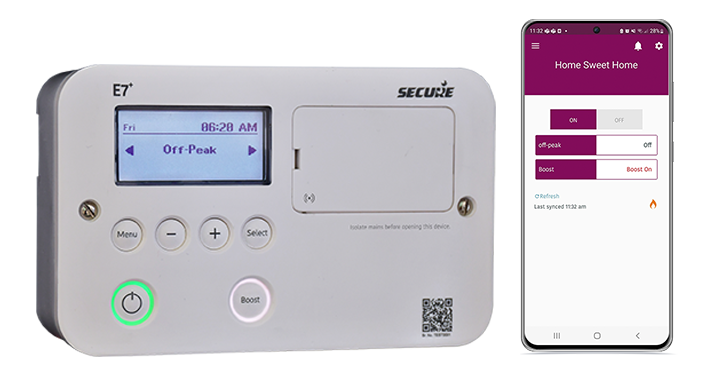
What I’m looking for now is a timer with boost option, to help my forgetful kids who haven’t yet realised the immersion doesn’t magically switch itself off!
 
Batteries are huge investment
They’re not really. A 5kWh battery only costs about €900 these days, and is essential for a flexible usage profile that can move between self-consumption and maximised-export, depending on market and tariff conditions. The incremental cost of a battery should pay for itself in about 3 years.
 
Also, there are couple of giant companies working on much cheaper sodium batteries and It might be worth waiting couple of years for those.
General consensus is that price-parity between LFP and sodium remains a few years away, due to the sheer scale of LFP production capacity at present. I would not wait unless installation factors justified it, e.g. only installation option is outdoors, where sodium-ion’s superior cold-weather performance would make a big difference. Even then, I’d probably advise just paying the extra overhead for sodium today rather than waiting.
 
regret skipping this for a €400 saving on my install bill at the time. Not for the solar diversion but I could be timing my immersion to run from 2-5am for 6c per kWh of relatively clean electricity during 8 non-winter months of the year, compared to burning 8c gas at a higher environmental cost.
Yeah I want this, it just seems ridiculous to go and install a system without having it.
Go big or go home.

I think the biggest thing for me is accepting change and moving from a 24 hour unit rate onto an actual smart tariff.

Trying to get my head around the fact that the batteries are now the reason why I'll be doing this as they are my key for not having to pay the higher rate during the daytime.
 
What I’m looking for now is a timer with boost option, to help my forgetful kids who haven’t yet realised the immersion doesn’t magically switch itself off!
In case it's relevant at all ... I replaced my old Horstmann Nightsaver "Economy 7" Quartz electromechanical timer with one of these digital units last year that I picked up second hand (although unused) on Adverts.ie for €80 (should be possible to get them online for about €130 brand new). It controls my dual element Nightsaver immersion. The old timer was working fine but could only do a fixed 5-7 hours at night while with this one I can do as little as 15 minutes and 2 hours is more than enough for my needs.
 
Last edited:
Back
Top