I think people are forgetting that market rent in a rising market is always going to be higher than the previous rent set in that market. BY what percentage. Well thats what a any person company is willing to pay for the property to secure it. If you advertise above what the market dictates it will remain empty as nobody will pay that. If somebody is willing to pay it, then thats either below market or market. Each new rental sets a new market rent once its rented. The problem here is the RTB play by whatever rules or definitions suit them, not actual real rules or definitions. You cant even take the RTB to task on it because there is no independent adjudicator on issues between you and the RTB.
You are using an out of date browser. It may not display this or other websites correctly.
You should upgrade or use an alternative browser.
You should upgrade or use an alternative browser.
RTB Rent Register
- Thread starter Sr. Tayto
- Start date
It shows the mentality of the RTB. As well as manipulating the Tenancy Register to make it look as if landlord and tenancy numbers aren't reducing, they are now trying to grant themselves the power to determine rents.That isn't the legal definition. That is what the RTB want it to be. By making it "reasonable", they make it subjective, so they can use their discretion.
Exactly - they are creating a system where they determine whether your rent is appropriate or notThe problem here is the RTB play by whatever rules or definitions suit them, not actual real rules or definitions. You cant even take the RTB to task on it because there is no independent adjudicator on issues between you and the RTB.
I've noticed the RTB register query does not work as described on their page.
Search results for:
reference_eircode = "D03W5N0" (random Clontarf address)
reference_dwelling_type = "House"
reference_ber = "C1"
reference_bedrooms = 3
reference_floor_space = 83
RTB register returns:

I wrote a piece of code which emulates the logic described on the RTB page - using all the 267 properties I found in the area - and the resulting 10 hits are:

Observations:
Search results for:
reference_eircode = "D03W5N0" (random Clontarf address)
reference_dwelling_type = "House"
reference_ber = "C1"
reference_bedrooms = 3
reference_floor_space = 83
RTB register returns:
I wrote a piece of code which emulates the logic described on the RTB page - using all the 267 properties I found in the area - and the resulting 10 hits are:
Observations:
- Only 4 of the properties the RTB query returned are on the list I obtained by emulating their logic. Marked in Green,
- It correctly finds the two "exact matches", the two with C1. There were no other C1s in the 267 properties.
- It looks like it does not follow its advertised logic for "non-exact" matches.
- The RTB register query does not follow the sort order described on their web page. If it did, the two C1 properties would be first on the list, as exact matches, and non-exact matches would also be sorted by tenancy start date.
- Not visible here, but I found earlier, the address from step 1 somehow also influences the result. Without more visibility into the data its impossible to tell how.
- Rent range returned by the RTB query tool: min 673, max 3200, average 2259.
- Rent range returned when I emulated the logic decribed on the RTB page: min 1500, max 3200, average 2400
Last edited:
A similar example to the last.
input parameters:
reference_eircode = "D04T3F4" (random address in Dublin 4 Pembroke area)
reference_dwelling_type = "Apartment / Flat"
reference_ber = "B3"
reference_bedrooms = 1
reference_floor_space = 40
RTB Register returns:

Emulating the published RTB logic on the 921 properties I found in the area:

Observations:
input parameters:
reference_eircode = "D04T3F4" (random address in Dublin 4 Pembroke area)
reference_dwelling_type = "Apartment / Flat"
reference_ber = "B3"
reference_bedrooms = 1
reference_floor_space = 40
RTB Register returns:
Emulating the published RTB logic on the 921 properties I found in the area:
Observations:
- Only 2 properties appear on both lists
- 3 "exact matches" in the EA according to the documented RTB algorithm do not appear in their own results.
- It appears probable that the RTB query is prioritizing proximity of the location (address) over BER rating, although they don't document that on their page
- Sort order does not match that documented on the RTB page at all. The page says that the results are sorted by two criteria: (1) exact BER match first, then others (2) tenancy start date newest first.
- Rent range returned by the RTB query tool: min 1194, max 2100, average 1639.
- Rent range returned when I emulated the logic decribed on the RTB page: min 1750, max 2400, average 1955 => Quite a lot higher if you want to justify a new rent level!!!
Last edited:
Very interesting - so the way they say the Register works is not the way it actually works.Rent range returned when I emulated the logic decribed on the RTB page: min 1750, max 2400, average 1955 => Quite a lot higher if you want to justify a new rent level!!!
Nothing would surprise me with the RTB at this stage.
Havent they also said that there are no cost rentals in there too.Very interesting - so the way they say the Register works is not the way it actually works.
Nothing would surprise me with the RTB at this stage.
You cant believe a word out of them at this point.
Havent they also said that there are no cost rentals in there too.
the way they say the Register works is not the way it actually works
Is it just incompetence on their part or are they following orders from the Minister and the Dept of Housing?
I'd say the RTB are following orders. It's hard to imagine they would go on a solo run themselves.Is it just incompetence on their part or are they following orders from the Minister and the Dept of Housing?
There will eventually be a tribunal on this I think.I'd say the RTB are following orders. It's hard to imagine they would go on a solo run themselves.
Who would be a landlord?
-to fix that issue, the government offers structures for foreign based investors pay no Irish tax at all. (E.g. foreign based investors in IRES REIT pay no tax at all in Ireland)
www.askaboutmoney.com
If anything the medians seems to be skewed slightly to the left of the curve.
Using Jupyter Notebooks I generated the following graphs - Pembroke Dublin 4 area apartments, Cork City South Central small houses, Dublin 8 apartments, Clontarf houses, South Donegal Houses, Firhouse houses, Galway City West houses.
The "south donegal houses" data shows less pattern, presumably because it's a relatively small sample of data and a rural area, but even then a bell curve of sorts could be fitted to the data.
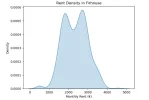
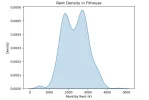
The rents in these areas all follow quite closely a normal distribution as shown by the graphs below (the red line represents a perfectly normal distribution, i.e. perfect normal distribution bell curve when plotted as such).
Caveat, I am a relative newbie to this, learning with the help of my AI assistant.
So, what can be concluded?
Rental prices are not random — they follow a consistent pattern
Most properties cluster around a typical rent level
In some areas, there are slightly more high-end properties than expected (curve up at the high end)
This pattern appears similar across different areas
and I would add... no evidence of "a mass of greedy swindling landlords". Rather, it's likely that rents follow a normal supply-and-demand model with heavy influence from RPZs.


Caveat, I am a relative newbie to this, learning with the help of my AI assistant.
So, what can be concluded?
Rental prices are not random — they follow a consistent pattern
Most properties cluster around a typical rent level
In some areas, there are slightly more high-end properties than expected (curve up at the high end)
This pattern appears similar across different areas
and I would add... no evidence of "a mass of greedy swindling landlords". Rather, it's likely that rents follow a normal supply-and-demand model with heavy influence from RPZs.
As I’d been talking to another landlord worried about resetting to market and BER ratings I decided to take a look on the much lauded RTB rent register comparator. Pop in my property address, my guesstimate of size of a one bed and up pops 10 on a lovely list. Prices range from 500 to 1600 euro. As argued by me this whole exercise is a nonsense. But in any case market rent is what a tenant will willing to pay. That list of 10 with some very low rents are either dives or landlords who were caught on the old system and never increased the rents. Give it about 6 months and that list of 10 will have higher values because right now on daft I can see similar properties and not one is below 1600. Which makes a mockery of this.
In addition my real rent, market, is higher than anything on the RTB list.
In addition my real rent, market, is higher than anything on the RTB list.
Agreed it's nonsense, but legally mandatory.As argued by me this whole exercise is a nonsense
How do you know they are dives? Almost every property in the country has been inspected at this stage. I've also noticed many with decent BER ratings yet very low rents.That list of 10 with some very low rents are either dives
Give it about 6 months and that list of 10 will have higher values because right now on daft I can see similar properties and not one is below 1600
I'm highly confident you'll see plenty below 1600. If your logic held, we wouldn't be seeing so many tenancies in the list that were first registered in 2018. Many estate agents have been complaining that they have yet to see March26 rentals, which been registered, show up on the register.
Give it about 6 months and that list of 10 will have higher values because right now on daft I can see similar properties and not one is below 1600.
Let's see in 6 months. I suspect the RTB wont have changed it much.
flyingfolly
Registered User
- Messages
- 189
How do you know nearly all have been inspected? There's two nearby us which are genuinely falling apart for years (roof clearly leaking, windows broken etc) but the same for years
Inspection in my area seems to have increased a lot recently. I was inspected twice in 18 months. Never in the 10 previous yearsnearly all have been inspected
How do you know nearly all have been inspected?
80k inspections in '24 alone. There's c240k registered tenancies.
Source
Same in Cork. Last inspector I met doing an inspection said all the city was done ( took them 4 years apparently)Inspection in my area seems to have increased a lot recently.
Out of curiosity, is it registered with the RTB? The inspection list is driven by the RTB register.There's two nearby us which are genuinely falling apart for years (roof clearly leaking, windows broken etc) but the same for years
In decades of renting, including council and then Hap was never inspected. That all changed about 5 years ago. Now it’s constant inspections. Received a letter for two new inspections on tenants that left 3 years ago. It’s some money making racket with 4 organisations involved.