Replacing old oil heating system-what are the options?

trident

Registered User
Messages
41
Hi, I want to replace my old oil boiler which heats all the radiators in a 4 bed semi-detached house.

House was built in early 1960's, and a back of envelope estimate I got to insulate the house to the standard needed before a heat pump is installed was about €50K. This is out of the question, so I think I have to replace the oil boiler with a new oil boiler.

There is no gas supply where I live.

My question is - are there any other alternatives?

Does anyone have experience of how much it takes to heat a 4 bed Semi Detached house with modern electric radiators, or modern electric storage heaters?

I have seen infra red heating being promoted on social media, has anyone experience of this? Is it possible to heat a 4 bed Semi Detached house with infra red, and how much would it cost?

Are there any other potential alternatives to oil boilers?

Any advice, comments would be greatly appreciated.

Many thanks in advance.

T
 
This document is a little dated but it's a good guide on how to prioritise energy improvements. Costs will need to be updated, but grants are a lot better now than they were then.

If a heat pump is out of the question, infra red will be too for anything other than supplemental heating.
 
Do you have your BER report? It usually comes with an advisory report which can be useful about where to start on an old house.
You can have an energy assessor do a technical report also, which we found invaluable.

Generally, unless you begin to start tackling the above there's no point in moving away from what you have. As a friend said to us, with a heat pump all you'll be doing is pumping heat out of the house.
 
Does anyone have experience of how much it takes to heat a 4 bed Semi Detached house with modern electric radiators, or modern electric storage heaters?
Assuming system efficiency of 70% and kerosene; Take the number of litres of oil you currently burn per year, multiply this by 10.35 and then by 0.7. This will give an approximate of the number of kWhr (units of electricity) needed to heat your house to the same level. Multiply this by the unit rate you pay for electricity and you will have a rough idea of what electrical heating will cost.
Example: You use 1,000 litres of kerosene a year. 1000x10.35x0.7 = 7210 kwh. @30cents per kWhr gives €2163.
 
LNG boiler is an option in your case - but LNG prices are poor also.
Best case honestly is to look at full attic insulation and pump walls or internal insulation. At least you can get the grants for those. Consider windows or doors or both if you can.

Back of envelope might not be accurate - have you a current BER? You might be closer than you think. If not get a full technical assessment done which is far more accurate than online estimates that make all kinds of assumptions.
 
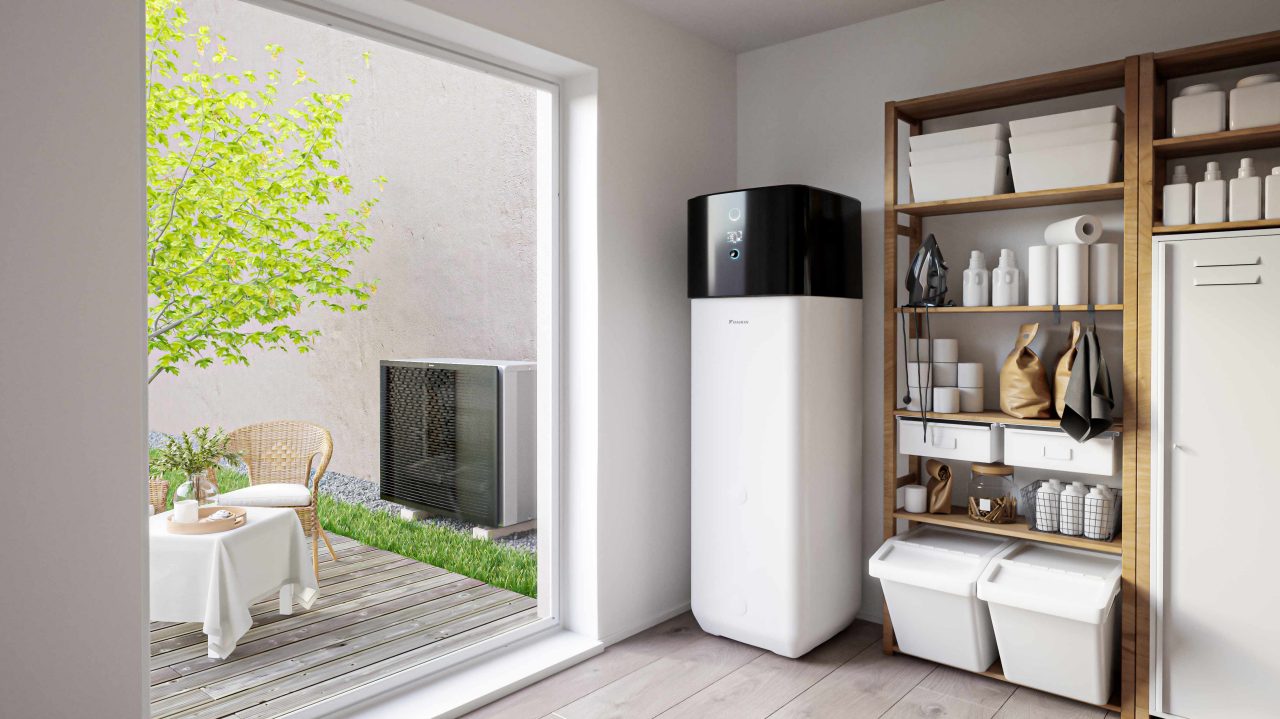
..Just saw this High temp heat pump apparently suitable in retrofits, as mentioned elsewhere on AAM:

 
We retrofitted a high temperature heatpump like that Daikin. It has absolutely no problem heating the house using the old radiators even on the coldest of days, in fact it never really needs the high temperature feature as 35-40 degree water is more than enough.

I’d have no concern that it could heat @trident’s home, the problem is if most of the heat they’re adding is quickly leaking back out they’ll regularly be running it at high temperatures to keep the house warm and that is especially expensive with heatpumps.

The photo of a house in the snow is telling on the Daikin site - the main claim of these high temperature heatpumps is that they won’t leave you cold even on the coldest days, not that they can necessarily do it efficiently!
 
Last edited:
Can the Daikin one be run for a couple of short bursts a day to heat rads, and not on all day/ electricity like usual heat pumps?
 
No you’d still want to run it like any other heatpump - as low flow temperature as possible that keeps the house as warm as you want it.

The high temperature feature just means that on very cold days it will be able to heat small radiators hot enough that the house stays warm. In a new build with under floor heating, which are effectively room sized radiators, you don’t need the water to be that hot to deliver a significant amount of heat to the house.
 
I'd go for a replacement oil boiler. The modern ones are hugely more efficient than old ones and you can have 3 zones - upstairs, downstairs and water only.

I replaced a 2003 installed boiler back in 2020 and the amount of oil used almost halved - the combination of better efficiency of a new boiler combined with better zone management and ensuring the temperature setting was optimised. But we also use electric heaters if just a single room needs a boost - eg, if I'm working from home and herself is out, I'll use electric heater in the office room.

And remember, oil prices are elevated at the moment - they will drop back and likely back under €1000/1000L. - Michael O'Leary is gambling on a big drop by March :p
 
Back
Top