Replace manual electric heaters with Wi-Fi controlled ones

SomeRandomer

Registered User
Messages
65
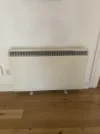
I have a couple of standard electric heaters. They're a wall-mounted Dimplex model with a manual timer. I'd like to replace them with Wi-Fi controlled ones that I can turn on and off remotely.
I searched for Wi-Fi ones but like everything there's an array of different types and sizes and I'm not sure which one would be a good replacement.
Does anyone have experience of Wi-Fi electric heaters? Would be good to get some recommendations.
(Pic of existing one attached)
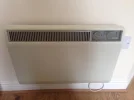

1755512079428.webp
 
You could keep your existing heaters and install a separate WiFi switch to controll them remotely. This could be wired in series with the existing wall switch.

Then leave the existing switch on and controll the heater by switching the WiFi switch.

WiFi switches are fantastic.

You can program in any timed sequence you want.

You can also set it to automatically switch on if the outside temperature drops below a certain level.

You can also set a notification, so you know if the heater has switched on. This is a useful feature just in case the heater is switched on in error. You can then switch it off.
 
Last edited:
@SomeRandomer

If you get an extender like this


You can then remove the wall switch and installl a WiFi switch like this into the extended box


These are rated at 16 amps and are okay for a 2 KW heater.

You can do the connecting up, or get an electrician to do it. Then replace the original wall switch on to the box extension.

You will need some extra long fixing screws for the wall switch.
 
Last edited:
I have some Rointe Olympia and find them brilliant, the app is very easy to use

Some older brands required a wifi gateway in addition to the wifi heater but thats old hat now so just double check on whatever you end up buying
 
I have a couple of standard electric heaters. They're a wall-mounted Dimplex model with a manual timer. I'd like to replace them with Wi-Fi controlled ones that I can turn on and off remotely.
That's the older version of the Dimplex PLXE range - basically you can get a very similar heater with exactly the same mounting plate on the back from Dimplex - https://www.dimplex.co.uk/products/installed-heating/panel-heaters/plxe-panel-heater#x-090737

You need to buy the Dimplex wireless module to fit them, and also their wifi gateway which is over 200 euros. But that would enable remote control, scheduling etc. The other difference with the newer version is that they will have built in thermistors and turn off if they detect optimum temperature, and turn off if they detect a window open. The benefit is mainly that you don't have to refit the whole backplate to mount to the wall.

I have 2 of the ones like yours in my own house and they are pretty powerful, and in my case the tenants who lived there before I bought the house had broken the scheduler dial. They are pretty powerful in a small closed room in particular. I looked at replacing the 2x 1.5w heaters with the newer ones, 2x wifi modules and the wifi gateway, and it came to nearly 1200 euro including delivery. That's without installation costs - best advice would be to get an electrician to switch them for you.

I had a nose around different types, something similar with built in wifi and no dependence on gateways is around 480 to buy off the shelf online, without installation. With installation similar wifi heaters seem to run at around 1500-1600 upwards depending on the model for 2 heaters. So in the end I've made do with my aging old heaters!
 
You need to buy the Dimplex wireless module to fit them, and also their wifi gateway which is over 200 euros.
This is madness.

Provided that the heater is no more than 2kw.

The simplest remedy here is to replace the wall switch with a 13 amp socket. Then put a 13 amp plug top on the heater and buy a smart plug / socket.
 
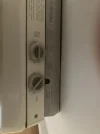
We have an even older storage heater. Probably installed when the place was build in 2000. I hate the sight of it but not enough to spend a lot of replacing it. However adding wifi controls would be good. But the schedule options on it are very limited, and of course there’s no manual or instructions.

Anyone got any suggestions on how we might make this more controllable?

I’ll try to add pics.IMG_9671.webp
 

Attachments

  • IMG_9670.webp
    IMG_9670.webp
    80.8 KB · Views: 6
@Annieindublin The two controls are Input and Boost.
Input = how much the heater draws in overnight, the higher the setting the more power it will use and more heat it will build up.
Boost = this is the output setting. Leave it at 1 overnight or when out of the house and then switch to a higher setting eg when sat down in the room for the afternoon or evening. I don't fully understand the difference between a late boost or early boost though.

Might be some information here:

The boost system on these heaters is semi-automatic.
When you switch to 9, it will keep the boost system active all the time.
This will provide extra heat output in the morning and throughout the day (so, early heat boost).
When set to a lower level, a thermostat mechanism in the heater keeps the boost system off until the main heat store cools down. This way, the boost doesn't come on until late in the day (late boost).
For a weekend, keep the boost setting high, this will keep the house hotter during the day.
For a weekday, keep the boost setting low. This will allow the house to cool a bit during the day, but increase heat output in the evening.


@DannyBoyD I have no idea. I assume modern ones are more efficient. I have doubts about ours anyway. It is in the hallway, centre of the apartment. I think this set up is common enough. Big empty hall, 4 room and a bathroom open off it and there’s a stairwell. Landing upstairs is always toasty warm in the winter which is a complete waste of course. Although I might star putting the clothes horse up there, make the most of it. Clothes do dry very well next to it and there’s plenty of space for that.

We have separate heating in each room, a mix of ceiling and underfloor heating.

I’ve no idea what it uses but actually since it runs on night meter I should be able to see it shouldn’t I?
 
@S class gave a good solution a few comments up. Replace the wall plate with a socket, put a plug on the radiator then buy a smart plug to operate the radiator via an app (or a script).

That looks like a storage radiator so I suppose is designed to only be heating up during cheaper electricity rates. So if you want variable on/off times then might make more sense to replace it.
 
Last edited:
Here is an example smart plug that can handle the current draw of a heater like that FWIW - https://www.amazon.co.uk/Maxesla-Energy-Monitoring-Google-Assistant/dp/B0CRD2BBBY?th=1. You can then control it from your phone remotely, set schedules etc. These things are great for the likes of your Christmas tree lights, lamps around the house too.

I assume modern ones are more efficient
All these electric heaters are essentially 100% efficient, every drop of electricity (energy) you feed in comes out as heat as there is no light or motion produced. How/when that heat is released is another matter, for example a storage heater that can store cheaper electricity at night then release it during the day is going to save you money if you need the house warm during the day, or conversely not be very useful if you only come home late in the evening and just want a blast of heat then. The point is that there will be no meaningful efficiency difference between an electric heater bought 30 years ago and one bought today, the savings come in modern controls that let you heat the house when it makes sense to do so.
 
With us both wfh most of the week it is useful to have some heating on during the day. That’s a change from prior years when it would have been a waste. We could do with upping the output as it gets colder at night. We were ok last year so we’ll see how it goes.

So actually we might not bother doing anything until the ugly look of it gets to me. And I think €€€ s win there.

We have a fairly high tech house in many respects, all the lights, except bathrooms, are smart lights with Alexa controls.
 
I’ve no idea what it uses but actually since it runs on night meter I should be able to see it shouldn’t I?
On your electricity bill, you should have different breakdowns & unit prices for your two meters.

It might be worth tweaking the settings before getting rid e.g. Input = 9 is max input, you could try a lower setting for Autumn. And see what difference early \ late boost option makes. If you want heat during the day then early boost seems like better option.
 
That’s quite chic. We’d need access at the top for the controls but I’m sure that is possible. Thanks. Good suggestion
 
The simplest remedy here is to replace the wall switch with a 13 amp socket. Then put a 13 amp plug top on the heater and buy a smart plug / socket.
The general safety advice is never to plug these devices into such plugs as the circuitry and wiring is not certain to support the high wattages required and likely to end up with a house fire. This would not be a recommended solution unless you can be sure that the plugs in use are rated for high draws. Same goes for any high draw electrical device also.
 
Provided that the heater is no more than 2kw.

The simplest remedy here is to replace the wall switch with a 13 amp socket. Then put a 13 amp plug top on the heater and buy a smart plug / socket

The general safety advice is never to plug these devices into such plugs as the circuitry and wiring is not certain to support the high wattages required and likely to end up with a house fire
The existing wiring to the switch is presumably installed to proper safety standards and is well capable of supplying the load.
 
The existing wiring to the switch is presumably installed to proper safety standards and is well capable of supplying the load.
I presume it was the smart plug that was being referenced. I'd avoid many of the cheap knock-offs available on Amazon and the likes, but you should be confident using any of the more main stream brands, anything with a valid CE certification should be capable of supporting the specified load.
 
Back
Top