You are using an out of date browser. It may not display this or other websites correctly.
You should upgrade or use an alternative browser.
You should upgrade or use an alternative browser.
Is there any guide that sets out how investment funds (via an insurance company) are taxed in Ireland?
- Thread starter JimmyB99
- Start date
Search Askaboutmoney and generally for LAET (Life Assurance Exit Tax) and you should find plenty of information. E.g.:
Thanks @ClubMan
Some helpful stuff there.
I don't see answers to my two main questions in relation to non-pension investments with an insurance company, as follows:
1. For a given fund, if (a) I sell units at below the purchase price and then (b) subsequently sell more units above the purchase price, how precisely is the tax calculated in (b)?
2. My second question develops further the question in 1 above and relates to the precise tax calculation if I have two funds (e.g. equity and bonds) in the same policy. How does the unit price movement in one fund affect the LAET calculations when taken money from the other fund?
No tax on (a) since they're sold at a loss; 38% tax on any gain from (b). There's no offsetting of losses under LAET if that's what you're asking about?1. For a given fund, if (a) I sell units at below the purchase price and then (b) subsequently sell more units above the purchase price, how precisely is the tax calculated in (b)?
I don't really understand the question. But if you mean different amounts invested in different products then there is no interaction between them in relation to taxation. Again, if you're thinking of how CGT and loss offsetting work then that's not how LAET works.How does the unit price movement in one fund affect the LAET calculations when taken money from the other fund?
Perhaps this Revenue guide might be relevant?
No tax on (a) since they're sold at a loss; 38% tax on any gain from (b). There's no offsetting of losses under LAET if that's what you're asking about?
Thanks Clubman,
So just to be clear, are you saying that if I invest €100k and I sell half for €40k when markets are down and the other half for €60k when markets have bounced back, I pay LAET at 38% on a "gain" of €10k.........when the truth is I've had zero overall gain on my investment?
Gains and losses on different funds in the same policy are offset against each other.But if you mean different amounts invested in different products then there is no interaction between them in relation to taxation. Again, if you're thinking of how CGT and loss offsetting work then that's not how LAET works.
LAET is at the policy level, not the fund level.
Last edited:
The answer depends on when the contact was startedAny info or links appreciated - thanks!
Sorry, I should have said "policy" rather than "product" for accuracy/clarity.Gains and losses on different funds in the same policy are offset against each other.
LAET is at the policy level, not the fund level.
That's my understanding.So just to be clear, are you saying that if I invest €100k and I sell half for €40k when markets are down and the other half for €60k when markets have bounced back, I pay LAET at 38% on a "gain" of €10k.........when the truth is I've had zero overall gain on my investment?
Ok - I'll read the guidance notes but already one can see how this is confusing. If I'm reading this right.....
but Clubman is saying that gains and losses on the same fund in the same policy are not offset against each other.
Are both statements really accurate?
Gains and losses on different funds in the same policy are offset against each other.
but Clubman is saying that gains and losses on the same fund in the same policy are not offset against each other.
Are both statements really accurate?
I was referring to the specific example that you gave earlier.But Clubman is saying that gains and losses on the same fund in the same policy are not offset against each other.
Maybe I'm mistaken above...1. For a given fund, if (a) I sell units at below the purchase price and then (b) subsequently sell more units above the purchase price, how precisely is the tax calculated in (b)?
I thought that loss offsetting under LAET only occurred when, for example, an 8 yearly deemed disposal tax event preceded another or final disposal?
Last edited:
Q1 is about gains and losses on the same fund at different points in time. If you sell at a loss (a real sale, not a deemed disposal) you cannot offset that loss later against a gain on the same fund.1. For a given fund, if (a) I sell units at below the purchase price and then (b) subsequently sell more units above the purchase price, how precisely is the tax calculated in (b)?
Q2 is about gains and losses between different funds at the same time. If the bond fund increases by €100 and the equity fund decreases by €100 then the tax due doesn't change. You can offset gains and losses on different funds in the same policy only.2. My second question develops further the question in 1 above and relates to the precise tax calculation if I have two funds (e.g. equity and bonds) in the same policy. How does the unit price movement in one fund affect the LAET calculations when taken money from the other fund?
Last edited:
When calculating LAET, the values of the various funds are not taken into account. Only the total value of the life assurance policy is considered.How does the unit price movement in one fund affect the LAET calculations when taken money from the other fund?
What you appear to be thinking is what is the tax due on a fund switch or if i do a withdrawal if one of my funds in the plan are up/down. Don’t think anout it like this in isolation as it operates at policy level rather individual fund level.
Exit tax or (LAET) is due when a chargeable event occurs. A chargeable event is any of the following:
1 - maturity of the policy, including on death
2 - full or partial encashment of the policy i.e a withdrawal, not a fund switxh
3 - assignment of the policy, in specifed instances, or
4 - on the 8th anniversary and every 8th year thereafter
Full encashment is the easiest to explain. On full encashment the taxable gain is simply the current value minus the contributions paid. Where there is a gain, tax is due on that gain at the current rate of 38%.
Examples of partials and encashments which take place after the 1st and subsequent 8th year get a bit tricky but of you need a specific worked example give details and i’ll show the workings.
@Smoneen - the link to the guidance notes posted above doesn't actually provide guidance to calculation methodology - so I may have to take you up on your kind offer!
Say I invested €500,000 and wanted to take €20,000 out of the fund at the end of each year. If the fund lost 20% in the first year and then gained 10% p.a. (all net of charges) in each subsequent year, in a gross roll-up fund, I think the figures would look like as shown on the table below. What I'm trying to understand is how the LAET will affect these figures!
Say I invested €500,000 and wanted to take €20,000 out of the fund at the end of each year. If the fund lost 20% in the first year and then gained 10% p.a. (all net of charges) in each subsequent year, in a gross roll-up fund, I think the figures would look like as shown on the table below. What I'm trying to understand is how the LAET will affect these figures!
Attachments
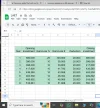
I totally agree @Corola. For now, I'm just trying to understand the math!
[The second part of this will then be discussing sensible strategy for someone who wishes to invest in a taxable fund for income drawdown purposes. The background here is that a financial adviser suggested to me last week that investing in a primarily equity based fund and drawing from this fund from year 1 was completely fine. When probed, he couldn't sensibly back up his assertion!]
[The second part of this will then be discussing sensible strategy for someone who wishes to invest in a taxable fund for income drawdown purposes. The background here is that a financial adviser suggested to me last week that investing in a primarily equity based fund and drawing from this fund from year 1 was completely fine. When probed, he couldn't sensibly back up his assertion!]

Brendan Burgess
Founder
- Messages
- 58,439
There are a few different issues being covered here which I had not thought about.
If I invest €100k in an Irish Life product ( It doesn't matter if it's in one fund or split between different funds)
If it falls to €90k and I cash half of it.
I will be left with €45k with a cost of €50k.
If it rises to €55k and I cash it, I will pay tax on the €5 k gain
So I put in €100k and took out €100k but pay tax on a gain of €5k.
Is that correct?
If I invest in €100k of shares directly. I sell half realising a capital loss of €5k. I can carry that loss forward and use it against the subsequent gain of €5k.
Brendan Burgess
Founder
- Messages
- 58,439
Life products and direct investment in shares are treated the same if you sell at a profit and subsequently incur a loss.
So if the Irish Life product rises to €110k and I cash half of it, I will pay tax on the €5k gain.
If the remaining half which cost me €50k falls to €30k when I cash it, I get no credit for the tax paid on the earlier gain.
That is the same for direct investing in shares.
So if the Irish Life product rises to €110k and I cash half of it, I will pay tax on the €5k gain.
If the remaining half which cost me €50k falls to €30k when I cash it, I get no credit for the tax paid on the earlier gain.
That is the same for direct investing in shares.