I might make a submission on a proposed investment product

Status
Not open for further replies.
It is a bit harsh that there isn't some tax reduction on the investment income or profits where these are relatively modest.

Again, I want to be more or less tax neutral. You may call for a reduction in taxes and I might call for an increase in taxes.

The objective of this submission on behalf of investors is one which would have widespread support.
 
How will he ensure that significant amounts of whatever he comes up with will be invested in SMEs or indeed in the Irish economy at all?

He should not.

Govts should not use tax incentives, etc. to direct savings to particular areas, unless there has been a clear market failure.

Levelling the tax regime between savings types is one thing, encouraging savers into one type of asset, by firm size, or by nationality, smacks of financial repression.


Now, in saying that, it seems to me that there is some of market failure in financing housing development, but that is a separate issue.
 
Worth bearing in mind the tax-free limit is 300,000 SEK, equivalent to 28k€. The total limit, not annual limit.
Yes, but the interesting thing is that there is no actual limit to what can be invested with income/gains tax free. The annual charge is about 1% so effectively that is the tax on sums over €28k. That is why the bulk of ISKs are invested in equities. Considering that some folk seem to have no issue paying a 1% AMC it would be an interesting call whether you would prefer to pay taxes at full rate on your dividends/realised gains. At least 20 pages worth on AAM. I would start the ball rolling by arguing that high dividend stocks like Phoenix Group would be a no-brainer.
 
Last edited:
Look at all the Money Makeover posts "What should I do with 100k?"

I think it’s pretty fair to say the AAM users are not a representative group.

And even if they do have 100k it’s because they had nothing to do with it for 20 year bar stick it in the bank.

There is a legacy challenge for people with good savings but I imagine an easier sell and I think the better long term solution is to give an option to someone who has between €200 and €1,000 to invest a month.

You cover a lot of people with those numbers and give a lot of them additional room to put in any build up savings.

It doesn’t really matter how complex things are beyond that to most then.
 
I would ideally like it to be tax neutral - I won't argue that taxes are too high or too low - but just that there should not be inequality in the tax treatment of products.
The submission that you ended up making wasn't tax neutral.

This assumption results in an estimated full year cost to the Exchequer of €142 million for no tax arising from deemed disposal being paid in that year
Abolishing deemed disposal has a real cost and will favour rich investors with the benefit increasing the larger their pot size.
 
I certainly support any idea that makes ETFs less burdensome to invest in.

I like the idea of making tax treatments the same for Shares, ETFs, and life assurnace funds. Although how to make accumlating ones the 'same' is challenging.

Options for accumulating incudle 1. exclude them. 2. ignore them and allow that to gross roll up. 3. have people including the 'income' portion that was rolled up in their own income tax return. But I am not sure if existing reporting regime would make it easy to get that figure.
 
In terms of new product, I too assume they are thinking about some new vehicle that is shielded from tax, and limited in size, with an aim to encourage the 'man in street' to invest.

An alternative to a new tax shielded product, might be some scheme to allow limited early access to pension. (e.g. withdrawing a number of years contributions+growth, or xx% of pension, or up to 100k). Folks would be more willing to put cash in pension, if they knew they could get it out in case of need. Might be too complicated to administer though.
 
No consumer focused submission would be complete without a call for the 1% Government Levy to be repealed and the inclusion of some mechanism whereby consumers aren't forced to stay in the same products (with high costs) because exiting them means consolidating losses/ gains via deemed disposal.
 
Last edited:
The Irish Times devotes an editorial to this issue today. It clearly identifies the two quite different aspects of what Simon is suggesting.
The first is the (presumably tax neutral) reform of the current system and the IT mentions in particular ETFs, a bit of a hobby horse in these parts but in reality very much a minority sport.
The second is a new (not)-SSIA, possibly Simon's Simple Investment Accounts which as the IT notes will involve tax breaks. The IT sounds two warnings - one that it should not, like the SSIA, be a predominately cash vehicle and the second that it should not line the pockets of greedy providers and brokers.

Will the AAM contributor who writes the IT editorials please disclose any conflicts. ;)
 
@Corola this is the Government's argument for taxing unrealised gains:
Gemini AI said:
The government argued against a pure "realized gains" system for stocks and crypto for three main reasons:

  1. The "Lock-in" Effect: If you only pay tax when you sell, people might never sell their stocks just to avoid the tax. This "freezes" capital and is considered bad for the economy.
  2. The Budget Hole: If everyone holds their stocks for 20 years, the government gets €0 in tax revenue for those 20 years. They need the cash flow now to pay for current public services.
  3. Complexity for Banks: Surprisingly, it’s actually easier for a bank to report "Your portfolio was worth X on Jan 1 and Y on Dec 31" than it is to track the "cost basis" (the original price you paid) of every single share you’ve bought over the last 30 years.
 
Decent article here
Seems a bit contradictory to me...
We don’t need another inflationary state savings scheme – just overhaul the punitive tax measures on investments.
...
Deposits carry 33pc Dirt tax. End that. Investment and life assurance products are walloped by an onerous 38pc tax. Cut it. People can earn a maximum profit of only €1,270 a year from selling something before being whacked with tax. Make that easier.

Those with investments get taxed every eight years, even if they don’t collect the gain. Stop doing that.
Wouldn't those tax reductions be inflationary?
 
Not in the same way. SSIAs introduced new money into the system. Tax reductions let you keep more of the money you already have.
 
The SSIA was counter inflationary, indeed that was one of its purposes. It made a lot of people put away €250 per month. There was of course debate about the potential inflationary impact when the 5 years were up, but that was for another day. I seem to recollect that the price of cars did jump at the end of the bonanza.
 
Last edited:
The deemed disposal rules are great for politicians, who cannot think beyond the next election, as it gives them money in the here-and-now to spend.

One unfortunate side-affect of it is that, were a prolonged downturn to happen, an Irish investor would still likely have gains on their investments versus the purchase price of 8 years prior - but many would be forced sellers of their holdings at low prices to cover tax bills.

It'd be quite an annoyance to have been investing in a world ETF at a €100 average eight years ago, be continuing to buy units at an average of €200 last year and, after a 25% downturn, be selling at €150 this year to cover a tax bill. Of course, plans should be made in advance for such a scenario - but it's too complex for the masses; many of whom would feel duped as they'd see it more as selling last years units at a €50 loss to pay the taxman.

Basically, deemed disposal gives politicians money to spend today; to the detriment of the overall long-term wealth of the country.

There is, I believe, €170 billion sitting in Irish deposit accounts at the moment. The majority of these funds likely belong to the lower-middle class as the wealthy tend to be less likely to have large proportions of their wealth sitting in low-interest deposit accounts.

We can only guess as to what percentage of this €170 billion would have been invested versus deposited with banks today if, back in January 2008, an ISA-style savings account were introduced instead of deemed disposal. What we do know for sure is that, like in the UK with ISA's, every financial advisor worth listening to would have been advising clients to invest as much as possible of their long-term savings into these products after their pension and short term financial needs were taken care of.

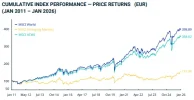
Looking at the 15 year chart of the MSCI world index, had 25% of the €170 billion been invested in the early years, it would have quadrupled by now. That'd be €127.5 billion still left on deposit and €42.5 billion having being invested and growing back to €170 billion.

From a long-term perspective, the total tax take on this pot, which has increased in size by €127.5 billion, would be much, much higher as the government are only raising pitiful levels of DIRT from it. Basically, the two eventual options for this money are for it to be spent in the economy, leading to the multiplier affect that has through the economy, or left growing to eventually result in the likelihood of a significant increased take in CAT on inheritance. However, it's few politicians that would advocate for a policy where the significance of the benefits are only going to be obvious long after they've left office.

I'm not sure we even need a completely tax-free account. An account where you could deposit €x annually that was only taxed at some meaningfully low, preferential, rate on sale of assets would be sufficient. Removing the deemed disposal rules alone will not result in any meaningful reallocation of the €170 billion as I suspect many holders of this wealth don't even know the deemed disposal rule exists.

Anecdotally, I know that I'd invest heavily in ETF's if deemed disposal were simply removed - but I'm already an investor. I also know that I couldn't persuade most of my family or friends to invest in them after removal of deemed disposal - I wouldn't even try as they'd just ask 'what's deemed disposal?'. If, instead, an account became available where you could invest in European shares and dividends/gains were taxed at a low enough rate within the account, I'd definitely be recommending them.

A large portion of the money sitting in deposit accounts likely belongs to those in the latter half of their lives. A case could be made to many, for example, for building an income stream of dividends, that aren't excessively taxed, as they approach the years where they want to drawdown on, as opposed to add to, those savings.

Of course, we have no idea what the future returns will be like on the alternative assets this €170 billion could be invested in - but not having a plan that promotes equities for a proportion of it for long-term investments is stupid; and they seem to be finally realising it.
 

Attachments

  • MSCI.webp
    MSCI.webp
    17 KB · Views: 31
Strange Irish Times article suggesting deemed disposal and loss relief shouldn't be considered because they are not simple..

Irish Times [Paywall]

Obviously, the idea of making the returns entirely tax-free is a hard sell and not entirely wise. The danger Harris faces when trying to design a tax-based incentive for these new vehicles is that he gets captured by the investment industry, which is far more focused on tweaking the existing system to the benefit of their current small but very wealthy and profitable client base.

When they start talking to him about “eight-year deemed disposal” and “limited loss-relief provisions”, he should take himself back to the simpler time of his boyhood.
 
Status
Not open for further replies.
Back
Top